

Research and publication ethics include a collection of ethical standards and directives regulating research practice and disseminating research outcomes in an ethical manner. These guiding principles are designed to ensure the integrity, credibility and transparency of the research process. Scifiniti is dedicated to the publication of high-quality articles through a transparent and rigorous peer review process, aligning with the highest publishing and ethical standards. In our commitment to upholding the integrity of scholarly publication, we have developed comprehensive guidelines for authors, reviewers, and editorial board members. When it comes to addressing ethical concerns, we strictly adhere to the guidelines set forth by COPE and ICMJE, and we strongly recommend that our authors, reviewers, and editors do the same.
All submitted manuscripts must strictly adhere to the core practices outlined by the COPE, which serves as a comprehensive guide for Scifiniti in upholding the highest standards of publication ethics and integrity in scholarly publishing. This encompasses ethical practices in publishing, peer review integrity, editorial board appointments, conflicts of interest, authorship and contributorship disputes, conflicts of interest, handling retractions, and addressing allegations of publication misconduct, including data falsification, fabrication, and plagiarism. Publication misconduct is strictly prohibited and stringent measures will be taken against individuals engaged in unethical activities.
Scifiniti abides by the guidelines recommended by the ICMJE and COPE for authorship criteria. To become an author, an individual must follow the four criteria stated by ICMJE:
The corresponding author is a primary author who coordinates with the Editorial office during manuscript processing from submission to publication process. They act as a liaison between the co-authors and the journal, keeping them updated with the manuscript status and decisions.
A coauthor is an individual who makes substantial contributions to the conception, design, investigation, methodology, execution, or analysis of research presented in the manuscript.
In the case of those manuscripts, where authorship is retained by the consortium or group, then the author list must contain the name of the consortium or group if individual authors meet ICMJE’s criteria of authorship (as described above).
It is recommended that individuals who do not meet all the specified criteria for authorship should not be included as authors in the paper. Instead, their contributions should be acknowledged in the acknowledgement section of the manuscript. This practice is in line with the recommendations from organizations such as the ICMJE and the COPE. Before proceeding with acknowledgement, it is essential to ensure the approval of the corresponding author and to adhere to the specific authorship and acknowledgement policies of the target journal to maintain transparency and ethical standards in scholarly publishing.
The following activities alone, without additional substantial contribution, don’t meet authorship criteria:
For further details, please review ICMJE's definition of non-author contribution.
If an author is deceased during the manuscript processing stage, then it is the responsibility of the corresponding author or co-authors to notify the editorial office. In cases where the deceased author was the corresponding author, the remaining authors, with mutual consent, should nominate another author to assume the role of the corresponding author. This information should be provided and appended, including the name of the newly nominated corresponding author, following the publication of the manuscript.
Gift authorship, also known as honorary authorship involves individuals who have made no significant contribution to the preparation of the manuscript. There could be several reasons to include a guest author such as establishing credibility or satisfying institutional or publication requirements.
Similarly, Guest authorship is an authorship with no contribution in manuscript preparation but their names are added for courtesy, gratitude, or other non-substantive reasons.
In contrast to gift and guest authors, ghost authors are those who have made significant contributions to the manuscript's preparation but their names are not listed in authorship. Instead, their contribution has been attributed to someone else in the manuscript.
Identifying guest, gift, and ghost authors is sometimes difficult. Scifiniti therefore follows COPE Guidelines to identify such authorship problems. If such authorship issues are identified, appropriate actions as recommended by COPE will be taken.
Scifiniti strongly adheres to COPE statement regarding the use of artificial intelligence in the manuscripts. AI tools such as ChatGPT and other large language models (LLMs) such as BERT, GPT-3, and T5 cannot take responsibility for submitted work, identify conflicts of interest, or manage copyright and licensing agreements so these tools can’t be listed as authors.
Authors are completely responsible for the transparency, originality, integrity, and validity of their manuscript's content, including sections generated by AI tools, and are consequently responsible for any violations of publication ethics.
Authorship disputes, if they occur, are addressed in accordance with the guidelines recommended by the COPE. Generally, disputed authorship does not justify retraction as long as there is no valid reason to question the validity of the findings.
Submitting the same manuscript in two or more journals simultaneously is strictly prohibited and will be considered an unethical publishing practice. Authors are therefore required to confirm that the manuscript they submit has not been submitted, in process, or previously published in any other journal.
During manuscript submission, authors are required to ascertain that it is an original contribution of the author/authors. If any portion is reproduced or reused from a previously published article, proper attribution must have been provided, has been properly attributed and permission from the original copyright holder, if necessary, must have been obtained.
Authors’ contributions toward the preparation of manuscripts must be properly mentioned in the manuscript. Authors are recommended to refer to CRediT (Contributor Roles Taxonomy), which offers a comprehensive taxonomy encompassing 14 distinct roles that characterize contributors' involvement in research outputs. These roles serve to specify the contributions made by each author to the article.
Authors are recommended to get signed, written permission (if necessary) from the copyright holder for the reproduction of already published figures, tables, or schemes.
Authors are highly recommended to provide appropriate attribution by citing others' work that has significantly impacted their manuscript.
Authors must disclose clearly if they have any possible conflicts of interest related to their manuscript at the time of manuscript submission.
Self-plagiarism is an uncredited use of authors’ own published work without proper citation in the manuscript. It is therefore recommended that the author properly cite his published work if reproduced or reused in the manuscript.
Authors are required to mention appropriately the name of the ethical committee that they have used for researching humans, animals, and plants. The name of the committee from where approval was taken and the reference number should be mentioned in the manuscript. Authors are also required to get consent from patients or legal guardians in case they use details, images, or videos of a person.
Any change in the authors’ list such as a change in sequence, addition, or deletion during or after the publication of the manuscript, must be approved by the listed authors. The corresponding author is therefore suggested to provide:
Scifiniti however, reserves the right to accept or reject modification based on provided evidence and in this connection, COPE recommended protocol will be used:
For comprehensive information on Authorship, please review “COPE Discussion Document on Authorship”.
Data fabrication and falsification are unethical practices undermining Scifiniti’s core scientific integrity principles. Data fabrication involves the deliberate creation of entirely new data detached from legitimate experimental or observational processes. Data falsification entails manipulating or altering existing data to misrepresent findings such as image manipulation, removing outliers or manipulated results, changing data points, etc. Both actions compromise the accuracy of research and can have severe consequences.
Authors are strongly encouraged to ensure that there is no intentional data fabrication and data falsification in their work.
In case data Fabrication or falsification is detected, it will be dealt with per the COPE recommendation, which may result in the rejection or retraction of manuscripts. Therefore, authors are strongly advised to exercise utmost care while submitting manuscripts.
COPE Recommendations
Fabricated Data in a Submitted Manuscript
Fabricated Data in a Published Manuscript
Plagiarism, the act of using someone else's work without proper attribution, is strictly prohibited within Scifiniti's publishing guidelines. Authors are strongly advised to submit only original manuscripts, ensuring that their work is a genuine contribution to the academic discourse.
Scifiniti employs professional plagiarism detection software to uphold the integrity of the peer review process. This software meticulously examines submitted manuscripts for any instances of plagiarism. In the event that plagiarism is identified during the peer review process, the manuscript will be subject to further evaluation. The decision of whether to reject the manuscript outright or request revisions will be made after a comprehensive content assessment, going beyond a mere percentage review.
It is essential to note that if plagiarism is detected after publication, it may result in the retraction of the manuscript. Authors are, therefore, strongly urged to diligently check their manuscripts using any reputable plagiarism detection tool before submission. This precautionary measure aims to prevent rejection due to similarities in content and ensures the scholarly integrity of the publications associated with Scifiniti.
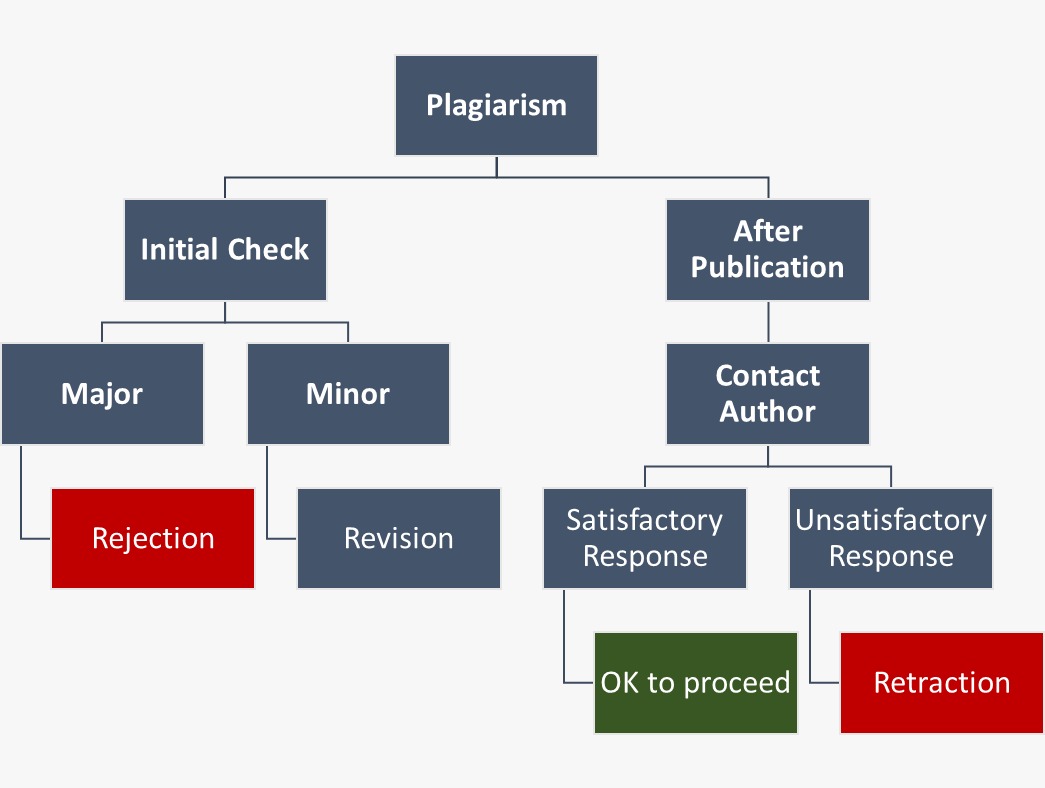
Scifiniti strictly follows COPE guidelines to deal with cases of plagiarism.
Similarly, image files must remain unaltered or modified in such a way that could not change the information of the original image. These inappropriate modifications include modifying any of the features of the image, combining it with any other image, enhancing brightness, contrast, colour balance, etc. If image manipulation is found during the peer review process, then the manuscript will either be rejected or modified. If image manipulation is found after publication, then it will be handled, as per the suggested protocol of COPE.
The following are the useful links on image manipulation:
When documenting research that involves human subjects, human materials, human tissues, or human data, it is imperative for authors to state that the research adhered to the principles outlined in the Declaration of Helsinki of 1975 (revised in 2013). More information about the Declaration of Helsinki can be found at https://www.wma.net/what-we-do/medical-ethics/declaration-of-helsinki/.
According to point 23 of this declaration, “The research protocol must be submitted for consideration, comment, guidance, and approval to the concerned research ethics committee before the study begins. This committee must be transparent in its functioning, must be independent of the researcher, the sponsor, and any other undue influence, and must be duly qualified. It must take into consideration the laws and regulations of the country or countries in which the research is to be performed as well as applicable international norms and standards but these must not be allowed to reduce or eliminate any of the protections for research subjects set forth in this Declaration.
The committee must have the right to monitor ongoing studies. The researcher must provide monitoring information to the committee, especially information about any serious adverse events. No amendment to the protocol may be made without consideration and approval by the committee. After the end of the study, the researchers must submit a final report to the committee containing a summary of the study’s findings and conclusions.”
Authors are recommended to provide a separate section for Human rights and mention clearly that research has been conducted by the Declaration of Helsinki, along with the identification code and name of the Ethics Committee that has approved the protocol.
We expect authors should follow the Animal Use Alternatives (3Rs) model while conducting any research that requires the use of animals. These new scientific approaches proposed by Drs. William Russell and Rex Burch, help to minimize to maintain scientific integrity by reducing the pain and distress of research animals.
We recommend authors follow the “Basel Declaration” which summarizes essential principles to follow when conducting research in animals. The International Council for Laboratory Animal Science (ICLAS) has also published ethical guidelines that could help authors protect animal rights while conducting any research.
Authors are required to explicitly mention the name of the approval committee and reference number in their manuscript, emphasizing that they obtained both legal and ethical approval before commencing the research involving animals. Additionally, the authors must affirm that the experiments were conducted in strict adherence to the guidelines outlined below.
If ethical approval is exempted from any committee then this should also be clearly mentioned in the manuscripts along with the name of the committee that grants exemption.
Scifiniti recommends authors use ARRIVE guidelines for reporting research involving animals. Reviewers are also recommended to use CHECKLIST while reviewing a manuscript and provide their recommendations if the research is not in compliance with any of the points mentioned in the checklist.
For in vivo experiments, visit https://www.nc3rs.org.uk/arrive-guidelines
Experimental research on plants must be conducted in compliance with relevant guidelines published by the IUCN Policy Statement on Research Involving Species at Risk of Extinction, the Convention on Biological Diversity, and the Convention on the Trade in Endangered Species of Wild Fauna and Flora.
Authors are advised to provide ethical statements including the name and source of the plant used during research.
Example: Solanum tubersum was used in conducting research which was provided by Dr. (XYZ), affiliation, City, Country.
To support reproducibility, voucher specimens of rare and non-model plants must be deposited in a publicly accessible herbarium, public museum or another public repository. These vouchers should include documentation of specific parts of the plants which are used in the research, details of the geographical coordinates of the collection site and the collection date.
If a research involves the use of cell lines then authors should mention the origin in the methods sections of their manuscript. If an author has used established cell lines then the source and reference of the published article should be mentioned. For previously unpublished de novo cell lines, details of the ethical committee and approval should be mentioned in the manuscript. Informed consent must be taken in cases where human cell lines are used.
Example: The HaCaT cell lines were provided by XYZ
For misidentification and contamination of human cell lines, please International Cell Line Authentication Committee (ICLAC) and NCBI database.
For use, ISSCR Guidelines for Stem Cell Research and Clinical Translation should be followed for reporting experiments on human embryos, gametes and embryonic stem cells.
If authors have used details, images, or videos of a person, then written consent from the relevant individual must also be taken to publish under Creative Commons Attribution License 4.0. If an individual is under 18 then parents or legal guardians must be contacted for their consent to publish data. Personal identifiers, such as names, initials, or hospital numbers, should not be disclosed in the manuscript unless it is indispensable for scientific purposes.
In cases where an individual has passed away, it is necessary to seek consent for publication from their immediate family or next of kin. The manuscript should incorporate a declaration confirming that written informed consent for publication has been secured.
For unidentified images like X-rays, ultrasound images, etc., no consent for publication is needed.
For further details, ICMJE recommendations for “Protection of Research Participants”.
Scifiniti strongly recommends its authors follow ICMJE's recommendations for registration of clinical trials in a public trials registry. They are also recommended to cite it as a reference in their manuscript.
According to WHO “a clinical trial is any research study that prospectively assigns human participants or groups of humans to one or more health-related interventions to evaluate the effects on health outcomes. Clinical trials may also be referred to as interventional trials. Interventions include but are not restricted to drugs, cells and other biological products, surgical procedures, radiologic procedures, devices, behavioural treatments, process-of-care changes, preventive care, etc.” This definition includes Phase I to Phase IV trials."
In line with the position of ICMJE, Scifiniti strongly encourages authors to include a statement in their manuscript that the results are unpublished in a peer-reviewed journal; this information can however be updated as results are published.
Scifiniti recommends CONSORT for randomised controlled trials; authors submit CONSORT checklist and Protocol Flow Diagram during manuscript submission.
Authors are advised to follow ‘Sex and Gender Equity in Research – SAGER – guidelines’. Authors should ensure that the terms sex (referring to a biological attribute) and gender (influenced by social and cultural factors) are used carefully in order to avoid confusion in the two terms. In the introduction, authors should consider discussing the potential presence of sex and/or gender differences. Furthermore, they should detail the methods used to address sex and/or gender in the study's design and present data separated by sex and/or gender when it is relevant. Authors should also analyze and present results specific to each sex and/or gender group. If the study did not include a sex and/or gender analysis, the authors should provide a justification in the discussion. We recommend that our authors refer to the comprehensive guidelines before submitting their work.
Authors are required to disclose all sources of funding in the acknowledgment section of the manuscript. This includes grants, scholarships, sponsorships, or any financial contributions. Details such as the name of the funding agency, grant number, and specific requirements set by the funding body should be clearly stated.
As a scientific publisher, we maintain a strong commitment to upholding the highest standards of integrity, objectivity, and transparency in the dissemination of scientific knowledge. We recognize the importance of managing potential conflicts of interest to safeguard the integrity of the research and scholarly content we publish. Authors are strongly recommended to disclose any potential conflict of interest in their manuscripts under the section “Conflicts of Interest”.
Examples of Financial Conflicts of Interest
Examples of Non-Financial Conflicts of Interest
Scifiniti follows COPE’s recommendation to deal with undisclosed conflict of interest cases before or after the publication.
Undisclosed conflict of interest in a submitted article (View COPE guidelines).
Undisclosed conflict of interest in a published article (View COPE guidelines).
Authors are expected to follow the COPE Citation Policy while citing any article in their manuscripts. Citations manipulation by authors, reviewers and editors is strictly prohibited.
Authors should avoid artificially inflating citations by including an excessive number of references to their own work or to the work of colleagues and friends. However, citing previously published work is acceptable when it is genuinely relevant. In such cases, proper citation is essential to prevent self-plagiarism, redundant publication, or misrepresentation of scholarship. Scifiniti emphasizes that reviewers must carefully assess the relevance and appropriateness of all references and that the Editor-in-Chief must ensure citation practices adhere to ethical standards. Following these principles helps maintain the integrity, transparency, and credibility of published research.
The fairness, impartiality, and transparency of the peer review process are paramount responsibilities of editors. Editors are tasked with ensuring that selected reviewers possess relevant expertise in the article's topic and do not have any conflicts of interest with the authors. Furthermore, editors should scrutinize reviewers' suggestions for adding references, ensuring that reviewers do not recommend their own work unless it is pertinent to the manuscript. This meticulous assessment is essential for identifying and addressing potential sources of bias in the peer review process.
Editors have a critical responsibility to guarantee the absence of conflicts of interest among reviewers and authors, a fundamental requirement for maintaining a transparent and unbiased peer review process. In instances where editors themselves hold a conflict of interest with the authors, they should not involve themselves in the review and decision-making processes. In such situations, editors are recommended to assign an alternative board member to manage the peer review process and make the final decision.
The Editor-in-Chief holds the responsibility of making unbiased decisions regarding manuscript publication and the appointment of Editorial Board members. These decisions should be made without regard to factors such as race, gender, sexual orientation, religious convictions, ethnic heritage, citizenship, or political affiliations. The Editor-in-Chief must appoint Editorial Board members from diverse regions. The Editorial office is committed to providing comprehensive support and guidelines to establish a transparent appeal process against decisions, reaffirming the journal's unwavering dedication to principles of fairness and accountability.
Editors hold the ethical responsibility of safeguarding the integrity of published work. This involves vigilant monitoring to detect issues related to plagiarism, data fabrication, and other forms of ethical misconduct, whether through the use of plagiarism detection tools or expert judgment by our Advisory Board members. Editors enforce the publication's ethical guidelines for both authors and reviewers, ensuring adherence to standards for authorship, data presentation, and citations. Additionally, they are entrusted with managing potential conflicts of interest by requiring full disclosure and transparent resolution when conflicts arise. When ethical violations are found after publication, editors are advised to take immediate action, such as issuing retractions or corrections, and communicate these actions transparently to readers.
An editor must refrain from any endeavour to artificially boost the journal's metrics to enhance its ranking. Upholding ethical principles is the primary responsibility of an editor. Editors should not add any references to the journal's articles unless their inclusion is necessary for the article. Furthermore, authors mustn't be forced into incorporating citations of the editor's own work.
Editors are entrusted with the duty to maintain the privacy of submitted manuscripts, safeguard authors' intellectual property rights, and ensure that unpublished research findings are not disclosed or misused. This involves keeping manuscripts confidential, instructing peer reviewers on the importance of discretion, and restricting access to submitted content. COPE provides comprehensive guidelines that emphasize the duty of confidentiality for editors and reviewers, secure data and material storage, transparency in data sharing, and the importance of peer reviewers upholding confidentiality.
Editors should avoid using AI or AI-assisted technologies in the decision-making stages of a manuscript. This is due to the fact that the discernment, critical analysis, and original evaluation required for such tasks lie beyond the capabilities of this technology. There exists a notable risk that the application of AI tools may lead to the generation of inaccurate, incomplete, or potentially biased conclusions regarding the manuscript.
The editorial process, the ultimate decision, and subsequent communication with the authors are the responsibility of the editor. By adhering to these principles, editors safeguard the integrity of the editorial process and maintain the trust of authors and readers alike.
Post-publication monitoring is a vital responsibility for editors, involving the continuous and systematic review of all published articles to detect misconduct, such as plagiarism. When such issues are identified, editors are required to take proactive action as per the guidelines of COPE, working collaboratively with authors to make necessary corrections, updates, or retractions to rectify the problems. Equally essential is transparent communication with the journal's readers and the broader academic community, ensuring that corrections and updates are disclosed promptly and accurately.
Peer review is the foundation of quality publication; reviewers are therefore expected to rigorously maintain the principles of impartiality while reviewing any manuscript. The principle of impartiality and objectivity is an important aspect of the ethical duties of reviewers in the peer review process. It is strongly recommended that reviewers conduct the peer review process in an unbiased and transparent manner. Here's a more detailed elaboration of this principle:
Reviewers are expected to assess manuscripts solely based on their scientific quality, originality, and significance without considering authors’ identity, affiliation, personal beliefs, etc.
While the editorial office takes care to ensure that reviewers assigned to manuscripts are neutral and free from conflicts of interest with any of the authors, reviewers must remain vigilant. If reviewers come across any manuscripts for review where they suspect a potential conflict of interest, they should promptly inform the Editorial Office. This proactive communication will allow for the prompt assignment of an alternate reviewer, ensuring the integrity of the peer review process.
We require our reviewers to uphold the confidentiality of manuscripts and to refrain from disclosing any manuscript details to third parties. If reviewers wish to collaborate with another reviewer on a manuscript, they must first inform the editorial office. This allows us to verify the credentials of the co-reviewers and assess the potential for conflicts of interest.
Reviewers are also obligated not to incorporate any unpublished materials, data, or concepts from the manuscripts they review into their own forthcoming work without obtaining written consent from the original authors.
At Scifiniti, our peer reviewers are advised against utilising AI tools during the peer review process. We place a strong emphasis on our reviewers' responsibility to safeguard the integrity of authors' publications. Accordingly, we request that our reviewers refrain from using AI tools to assess manuscripts, as this may potentially compromise authors' rights to maintain the confidentiality and proprietary nature of their work. The use of AI tools is strictly prohibited, not only for the evaluation of scientific quality but also for the improvement of language and readability.
AI tools have limitations, particularly in their capacity to evaluate originality, novelty, and the overall quality of a manuscript. These aspects require the unique perspectives, original evaluations, and critical thinking abilities of human reviewers, which fall beyond the capabilities of AI technology. As such, there is an inherent risk of incorrect assessment when relying solely on AI tools.
Therefore, we ask our reviewers to accept manuscripts for review only when they believe they can provide a comprehensive evaluation based on their expertise and the manuscript's content.
Reviewers are encouraged to accept manuscript review requests only when they can commit to timely completion. If reviewers anticipate needing additional time, they should promptly communicate with the editorial office. Extended deadlines can have a significant impact on the publication process; therefore, the editorial office may need to reach out to other reviewers in the event of prolonged delays.
Reviewers are expected to promptly notify the editorial office if they encounter instances of plagiarism in the manuscripts they are reviewing. They should refrain from conducting further reviews and await guidance from the editorial office.
Reviewers should be vigilant for ethical concerns in the manuscript, such as data fabrication, unethical experimentation, image manipulation, or violations of research ethics. They are advised to immediately inform the editorial office about any such concerns. They are advised to follow the ethical guidelines of the journal and any applicable ethical standards in the field, such as those outlined in the COPE guidelines.