

Scifiniti Publishing operates a rigorous, fair, and transparent editorial process guided by COPE’s Principles of Transparency and Best Practice in Scholarly Publishing. Editorial decisions are made independently by the Editor-in-Chief and/or the designated Academic Editor in accordance with journal policies and academic merit. Manuscripts normally undergo an initial pre-check, external peer review by at least two independent reviewers, revision where required, and a final editorial decision.
All manuscripts must be submitted through Scifiniti Publishing’s online submission system at https://scifiniti.jams.pub/login.
Authors can track the complete status of their manuscript throughout the publication process via this platform.
Before submitting a manuscript, authors are strongly encouraged to carefully review the Author Guidelines of the respective journal as well as our Editorial Policies and Ethical Oversight. This helps ensure that the submission fully complies with Scifiniti Publishing’s requirements and criteria.
After manuscript submission, the editorial process is followed as below:
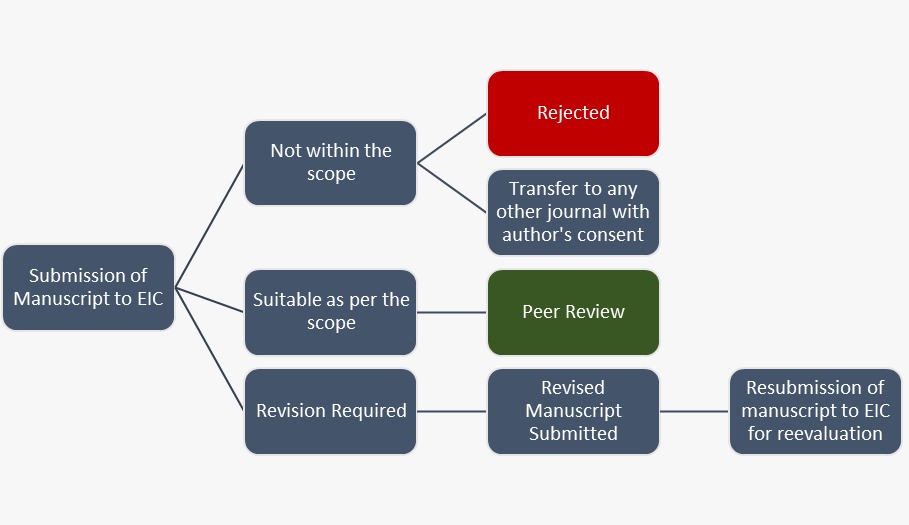
1.1 Technical Pre-Check
Upon submission, the Editorial Office conducts a technical and administrative assessment to confirm compliance with the journal’s requirements. This review may include:
If any required element is incomplete, unclear, or non-compliant, the manuscript may be returned to the authors for correction before further processing.
As part of the pre-check, Scifiniti Publishing may also carry out integrity and authorship verification procedures, including:
Material reproduced from preprints, theses, dissertations, or other sources must be properly cited. Manuscripts with excessive similarity, unverifiable authorship information, or insufficient disclosure may be returned for clarification, revision, or rejection, depending on the nature of the concern.
1.2 Editorial Pre-Check
Once the manuscript has passed the technical and integrity checks, the Editor-in-Chief or designated Academic Editor conducts an editorial assessment. This stage may consider:
Minor technical issues may be addressed alongside revision where appropriate; however, no manuscript proceeds to production until all mandatory technical, ethical, and quality requirements have been fully satisfied.
Manuscripts that fall outside the journal’s scope may, at the author’s discretion, be transferred to another relevant journal during the editorial pre-check stage. Manuscripts that do not meet the minimum academic or ethical standards will be rejected.
Where the Editor-in-Chief, a Guest Editor, an Editorial Board member, or any other editor is an author on the manuscript, or has a conflict of interest in relation to it, that individual will take no part in the editorial handling or decision-making for that submission. For transparency, full responsibility will instead be assigned to another qualified and independent academic editor.
Scifiniti Publishing operates a single-blind peer-review model. Reviewers are aware of the authors’ identities, but reviewer identities are not disclosed to the authors.
Manuscripts that pass editorial pre-check are normally sent to at least two independent reviewers with expertise relevant to the subject matter. In some cases, an additional reviewer may be invited when further specialist input is needed.
The review process is managed by the Editorial Office in consultation with the Editor-in-Chief, the designated Academic Editor, or any other authorized handling editor. Every reasonable effort is made to avoid conflicts of interest between authors, editors, and reviewers. Reviewers with an actual, potential, or perceived conflict of interest including recent collaboration, institutional overlap where relevant, or competing personal or professional interests - will not be assigned to the manuscript.
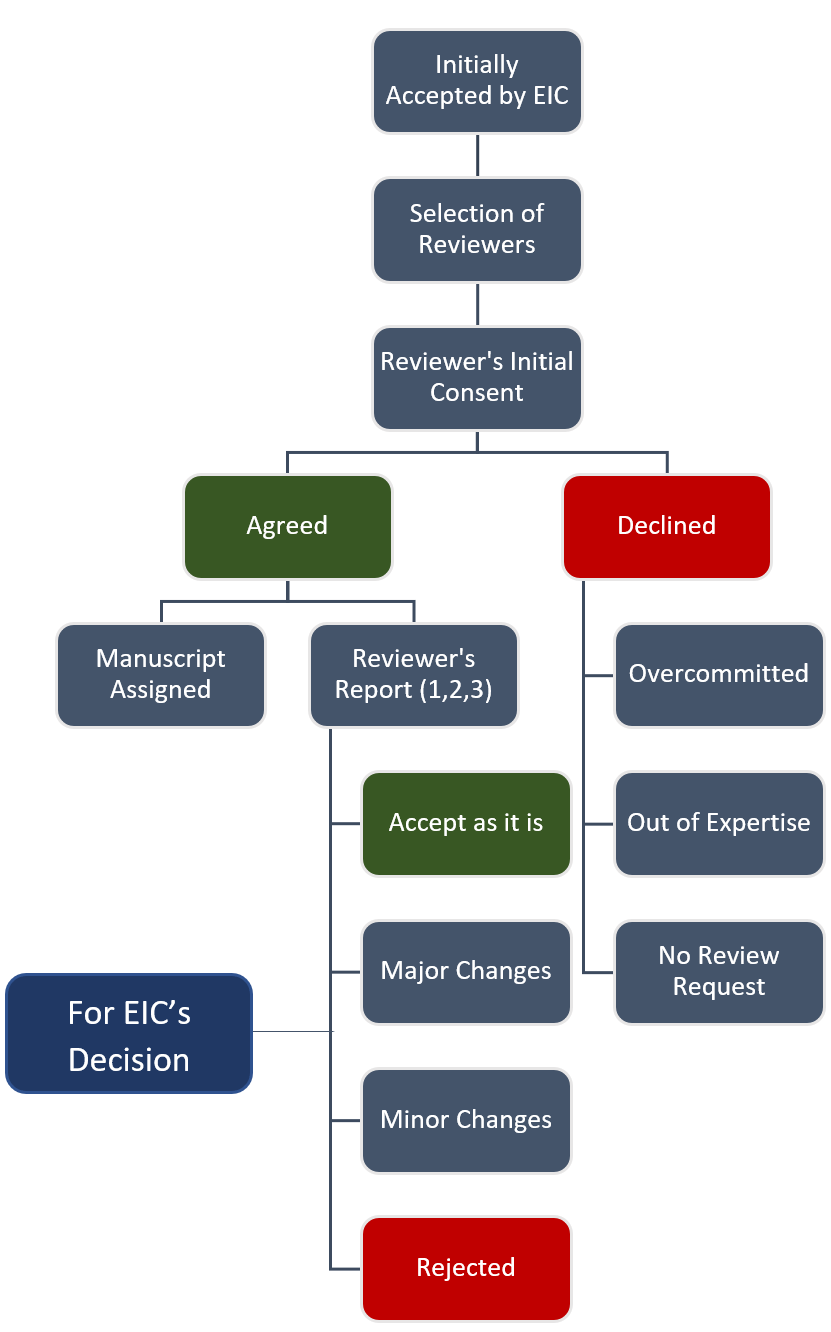
After the peer-review reports are received, the handling academic editor evaluates the reviewers’ comments and recommendations and issues an editorial outcome. The usual post-review outcomes are:
For a more detailed description of the journal’s reviewer workflow and operational procedures, readers may refer to Scifiniti Publishing’s dedicated Peer Review Workflow page.
Where revision is requested, the authors must submit a revised manuscript together with a detailed point-by-point response to the reviewers’ and editors’ comments within the applicable timeframe.
Alongside reviewer comments, the Editorial Office may also communicate any additional quality or compliance issues identified during processing, including matters relating to formatting, ethical documentation, figures, references, duplicate references, citation relevance, or excessive self-citation.
Revision timelines are normally applied as follows:
Minor Revision
Major Revision
A manuscript will normally undergo no more than two rounds of revision. If no response is received within the permitted period and no extension has been granted, the submission may be administratively closed. Any later resubmission may be treated as a new manuscript.
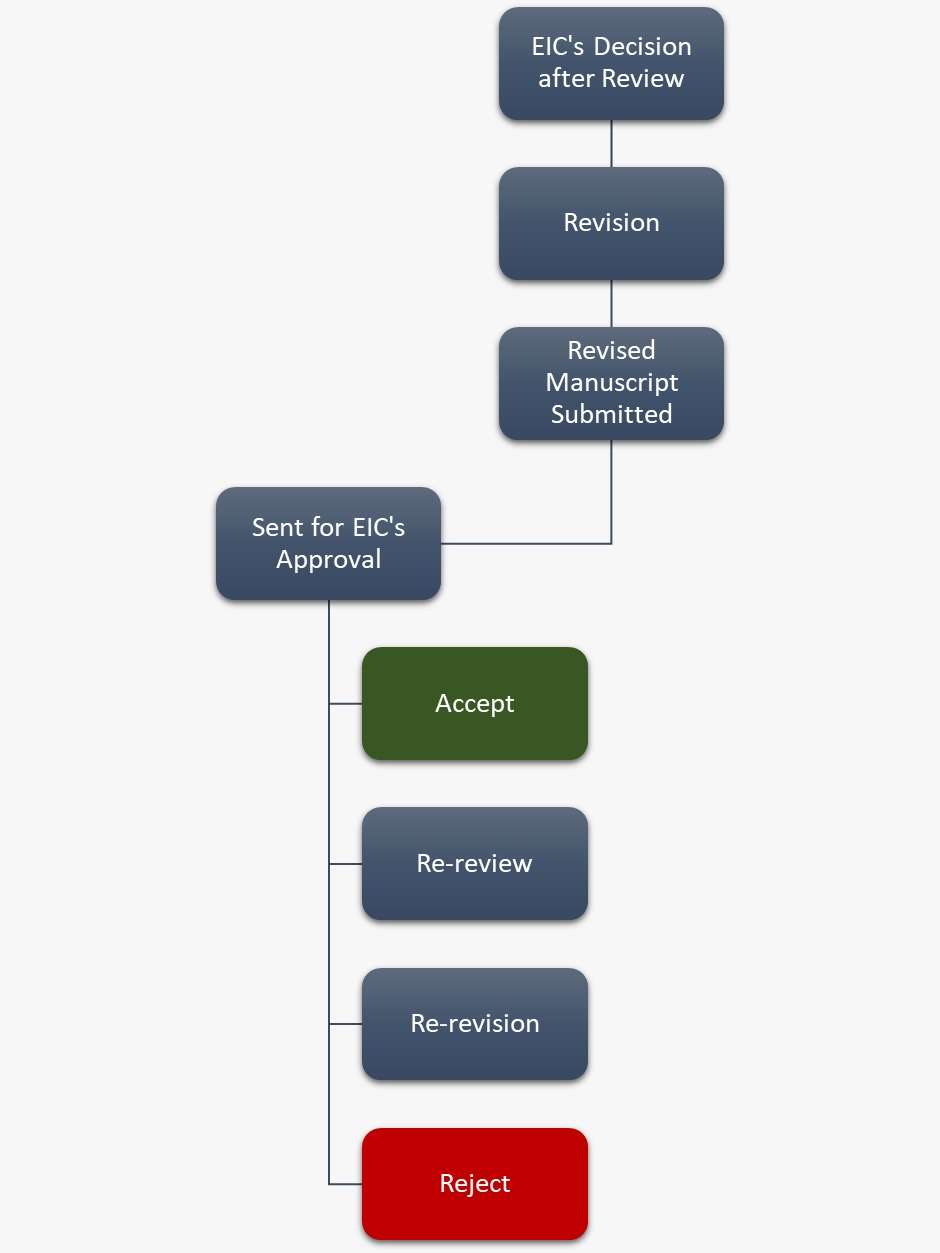
After each round of peer review or revision, the handling academic editor reviews the manuscript, the authors’ responses, and the reviewer reports before reaching a decision.
Although reviewer recommendations are considered carefully, the final decision rests with the Editor-in-Chief or designated Academic Editor. Where necessary, the editor may request further clarification, invite an additional review, or issue a final decision based on the available record and the journal’s standards.
Possible decisions include acceptance, further revision, or rejection.
Editorial Office support the process administratively, but they do not determine whether a manuscript is accepted or rejected.
Authors have the option to appeal a rejection by sending an email to the journal's Editorial Office. In order to initiate an appeal, it is essential that the authors provide a comprehensive justification, including a detailed response to the reviewers' and/or Editor's comments, addressing their concerns point by point. It's important to note that appeals can only be submitted following an initial "rejection" decision and should be sent within 30 days of the decision. An appeal will not be considered further if any of the mentioned criteria is not fulfilled.
Appeals should be supported by sound reasoning and substantial evidence that counteracts the criticisms outlined in the rejection letter. It's important to understand that a difference of opinion concerning the manuscript's interest, novelty, or suitability for the journal will not be regarded as a valid basis for appeal.
Upon receiving an appeal, the Managing Editor will forward it, along with the author’s response, reviewers’ comments, and any additional evidence provided, to the Editor-in-Chief for consideration. The Editor-in-Chief will normally evaluate the appeal and issue a final recommendation, which may include acceptance, further peer review, or confirmation of the original rejection decision.
However, in cases where the appeal concerns a decision made by the Editor-in-Chief or where a potential conflict of interest exists, an independent senior or neutral editorial board member will be assigned to handle the appeal process and issue the recommendation.
It is important to note that a rejection decision at this stage is final and cannot be reversed. For complete details on how to submit an appeal and how complaints are handled, please refer to the Complaints and Appeals section.
After acceptance, each manuscript is published online as an early access version in line with Scifiniti’s continuous publication model, allowing timely dissemination of the research.
A unique Digital Object Identifier (DOI) is generated and assigned to the article, making it fully citable.
The manuscript then proceeds to the production stage, which includes language editing, typesetting, proofreading, figure and table preparation, and verification of citations and references.
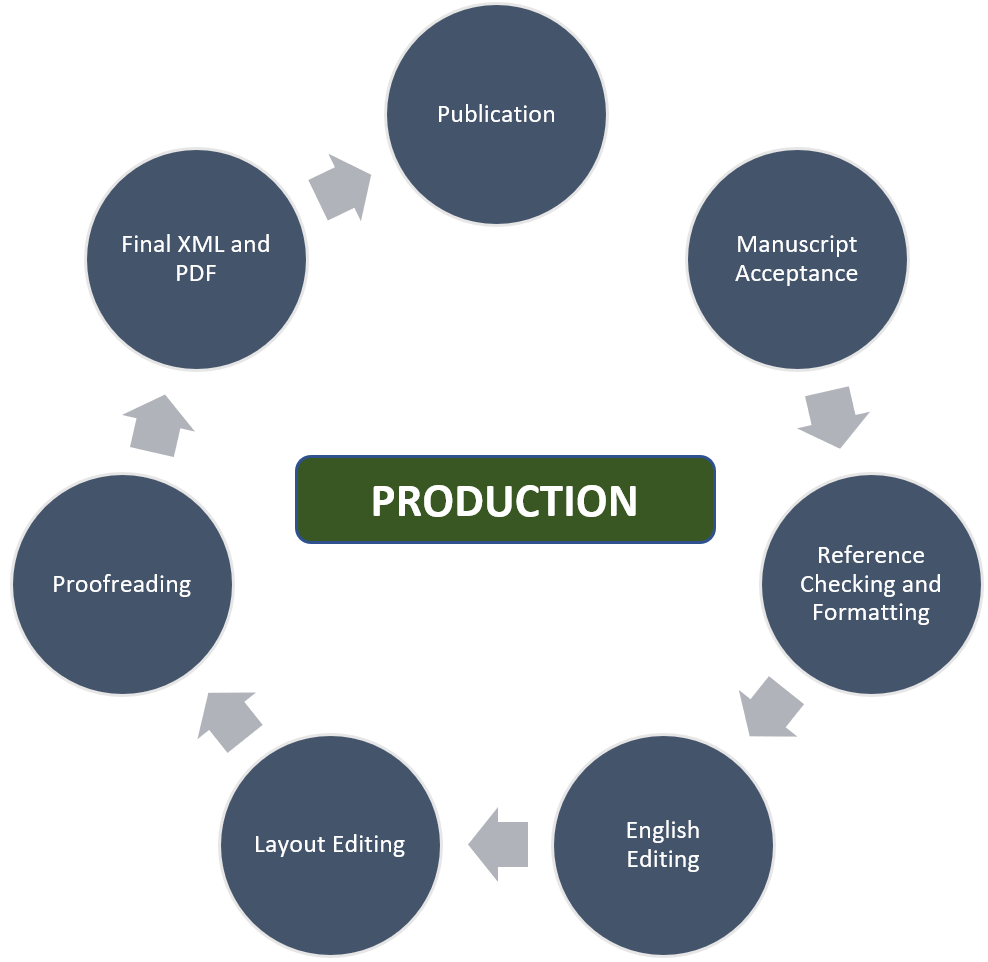
English Editing
Scifiniti Publishing is committed to ensuring that all published manuscripts meet high standards of English language clarity and readability. While authors are encouraged to review their manuscripts carefully and may choose to use professional language editing services before submission, all manuscripts that reach the acceptance stage undergo complimentary in-house English editing by our professional editorial team.
This process ensures that grammatical, typographical, and scientific language issues are corrected, enhancing the clarity and presentation of the research. Authors may also opt for additional professional language editing services at discounted rates if desired. Please contact us for a quote and further details.
Layout Editing
After passing through the language editing stage, the manuscript proceeds to Layout Editing, which involves formatting the manuscript according to the journal guidelines. This includes:
The final layout version is then sent to the authors for proofreading. Authors are strongly recommended to provide their responses and corrections within 48 hours to ensure timely progression of the manuscript through the production process. This step allows authors to identify and correct any errors or inconsistencies that may have occurred during the conversion
Proofreading
This is the final stage where the manuscript undergoes a thorough check for any errors. Any corrections pointed out by the authors after layout editing are also reviewed, and the authors are provided with another version of the corrected manuscript for their final approval. Our experienced proofreaders ensure that the final version is now free of errors. They however don’t make any extensive changes in the content or style. This is the last quality check before publication to identify any small errors that might have been missed during previous editing stages.
Editorial decisions are made independently by the Editor-in-Chief and designated academic editors based on scholarly merit, peer-review evidence, ethical compliance, journal scope, and editorial policy.
The publisher and Editorial Office provide administrative, technical, and production support, but they do not interfere in acceptance or rejection decisions.
Editors, Guest Editors, and Editorial Board members may not handle their own manuscripts. Any submission affected by an actual, potential, or perceived conflict of interest is reassigned to an independent academic editor, and the conflict is managed in accordance with journal policy and recognised publication-ethics standards.