Available Online: 29 Sep 2026
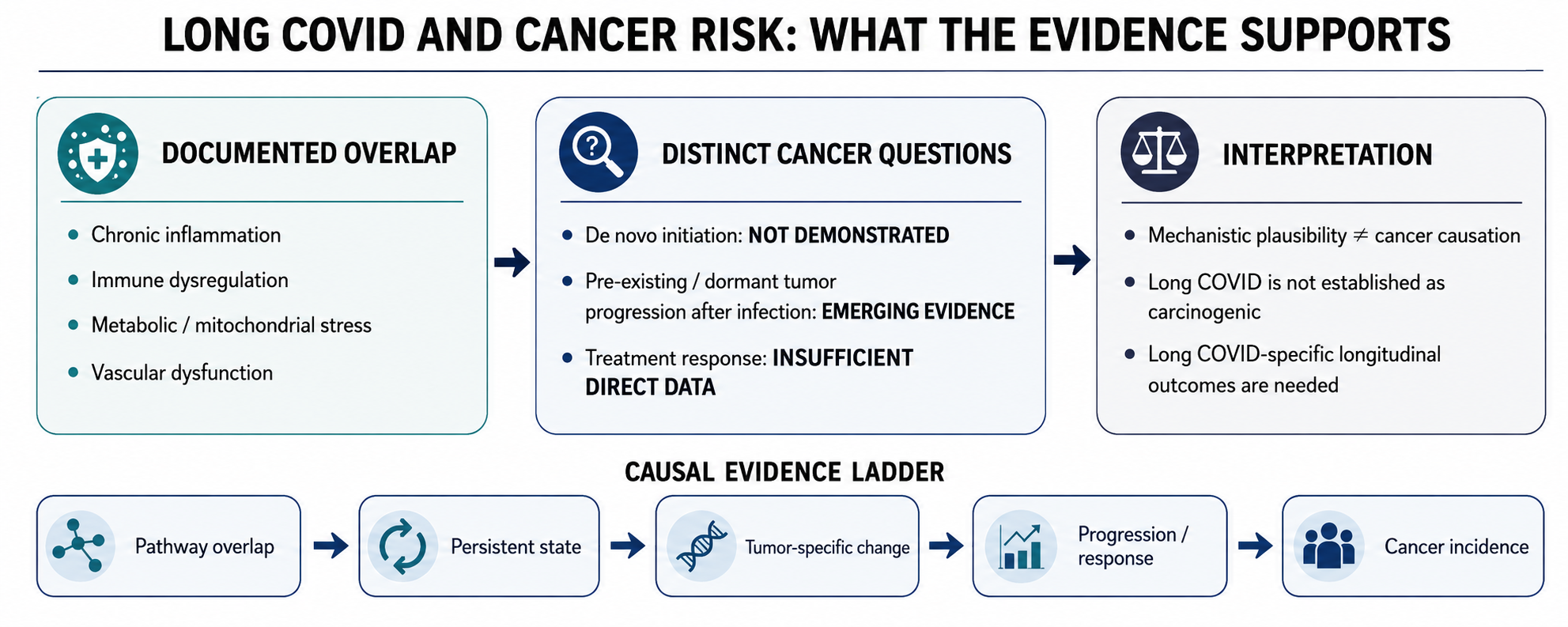
Long COVID and Cancer Biology: Distinguishing Mechanistic Overlap from Evidence Across Cancer-Related Outcomes
Volume 2
Subscribe for research updates and exclusive content straight to your inbox
Available Online: 29 Sep 2026
Volume 2
Robert Groysman
rgroysman@covidinstitute.org
Available Online: 26 Sep 2026
Volume 2
Ivan Bivolarski
ivanbozhidarov@gmail.com
Available Online: 25 Aug 2026
Volume 2
Ratu Purwanti
ratupurwanti@gmail.com
Yehezkiel Yonathan
ratupurwanti@gmail.com
Available Online: 20 Aug 2026
Volume 2
Dimitar Slavkov
d.slavkov@abv.bg
Svetoslava Troyanova Slavkova
sl_troya@hotmail.com
Published: 22 Jul 2026
Volume 2
Cletus Anes Ukwubile
caukwubile@unimaid.edu.ng
Hassan Braimah Yesufu
hbyesufu@unimaid.edu.ng
Published: 26 Jun 2026
Volume 2
Nicholas Foley
nick_foley@hms.harvard.edu
Alexej Dick
ad3474@drexel.edu
Simon Cocklin
s.cocklin@wriwindber.org
Published: 22 May 2026
Volume 2
Said Salim Said
saidalriyamy67@gmail.com
Burhani Simai
bsimai@yahoo.com
Sabra Salim Rashid
sunda015@gmail.com
Ahmad Makame Mwadini
ahmadmakame9@gmail.com
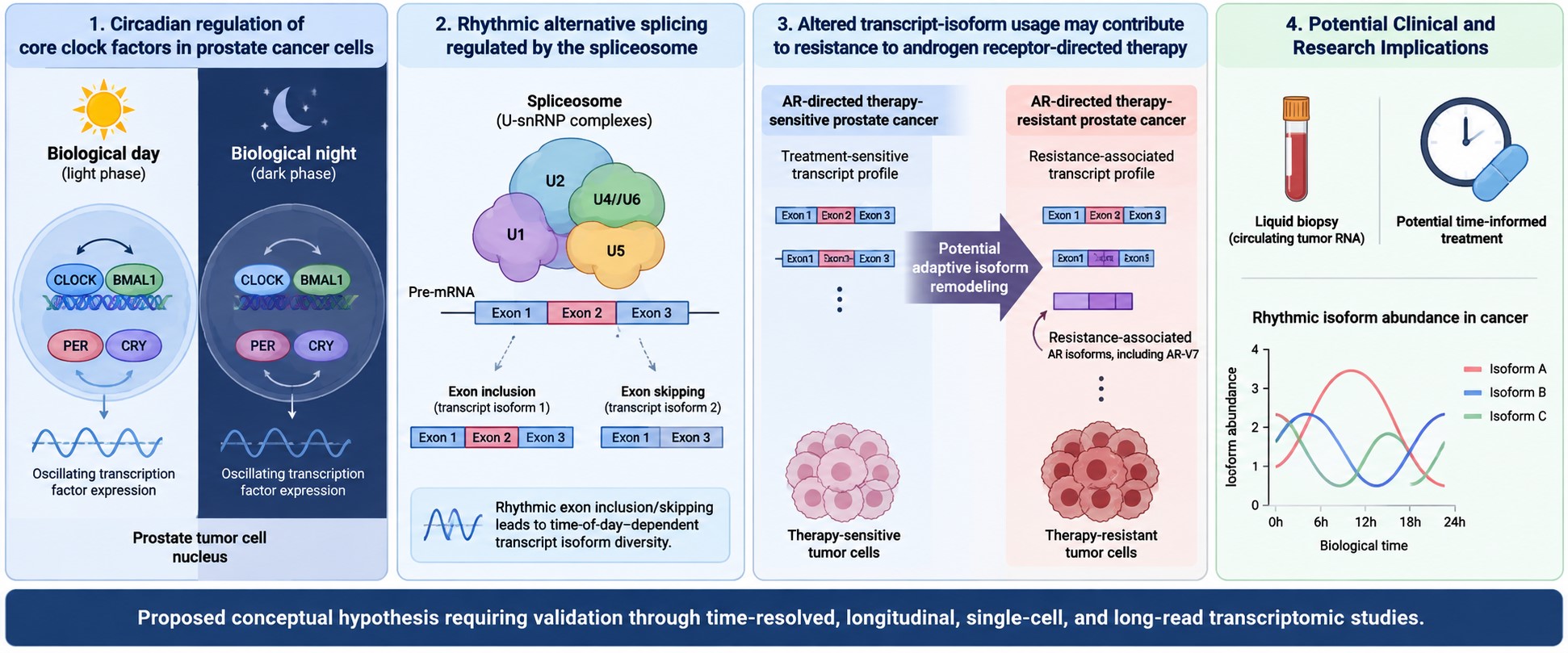
Drug resistance in anticancer therapy has long been a major challenge in oncology, biomedical, and pharmacological research. Despite numerous efforts targeting molecular and pathway-level mechanisms and evaluating combination therapies, current pharmacological approaches remain largely stagnant and show limited consideration of circadian variations in tumor biology and drug resistance. Growing preclinical and clinical evidence suggests that circadian rhythms fundamentally regulate drug metabolism, cellular stress, DNA repair, and adaptive resistance mechanisms. This..

Published: 26 Mar 2026
Volume 2
Natalya Risinskaya
risinska@gmail.com
Sofia Starchenko
starsof1309@mail.ru
Yulia Chabaeva
uchabaeva@gmail.com
Abdulpatakh Abdulpatakhov
patakh1997@mail.ru
Ekaterina Kotova
kotova.e@blood.ru
Valeriya Surimova
surimova.lera@mail.ru
Dmitry Bessmertnyy
dmitry_bessmertnyy@mail.ru
Anastasia Kashlakova
kashlakova.a@blood.ru
Anastasia Vasileva
vasilnastia@yandex.ru
Zalina Fidarova
fidarova.z@blood.ru
Olga Aleshina
gavrilina.o@blood.ru
Anna Yushkova
ann.unikova@bk.ru
Olga Dubova
doe30102001@gmail.com
Kseniya Nikiforova
nikiforova.k@blood.ru
Nikolay Kapranov
kapranov.n@blood.ru
Irina Galtseva
galtseva.i@blood.ru
Alina Ponomareva
a.ponomareva@genomed.ru
Ilya Kanivets
dr.kanivets@genomed.ru
Sergey Korostelev
korostelevsa@genomed.ru
Sergey Kulikov
smkulikov@mail.ru
Elena Parovichnikova
parovichnikova.e@blood.ru
Published: 31 Mar 2026
Volume 2
Vladimir N. Pak
oncoshut@gmail.com
Alpha-fetoprotein (AFP) delivers nutrients to immature cells in a shuttle-like manner via alpha-fetoprotein receptor (AFPR)-mediated endocytosis. A small subset of immature myeloid-derived suppressor cells (MDSCs) acts as a key regulator of immune tolerance during pregnancy, cancer, and other conditions. MDSCs, low doses of AFP, and AFP-binding ligands can modulate both the innate and adaptive immune responses. MDSCs decrease excessive immune activation, while their depletion can reverse immune suppression. Reduction of..
Published: 31 Dec 2025
Volume 1
Abinash Nayak
abinashnayakzoology@gmail.com
The BCL2 family of proteins serves as a central regulator of mitochondrial outer membrane permeabilization (MOMP) and intrinsic apoptosis, with anti-apoptotic members such as BCL2, BCL-XL, and MCL1 frequently overexpressed in many cancers to evade programmed cell death. Traditional BH3 mimetics, such as venetoclax and navitoclax, have revolutionized the treatment of hematologic malignancies by competitively inhibiting these pro-survival proteins. Yet, they face challenges, including acquired resistance, on-target toxicities, and limited..
Published: 17 Jun 2025
Volume 1
Walaa K. Mousa
Aya Al Ali
202221536@aau.ac.ae
Ranim W. A. Abdelmoteleb
ranim.abdelmoteleb@aau.ac.ae
Ruqaia Al Shami
ruqaia.alshami@aau.ac.ae
Najwa Al Ramadan
201920320@aau.ac.ae
Sedq Moutraji
sedq.moutraji@aau.ac.ae
Rose Ghemrawi
rose.ghemrawi@aau.ac.ae
Published: 23 May 2025
Volume 1
Bilal Rah
BRah@sharjah.ac.ae
Menattullah W. Mohamed
U24103098@sharjah.ac.ae
Aisha S. Janeeh
U21103311@sharjah.ac.ae
Tayma M. Kurabi
U24103495@sharjah.ac.ae
Jasmin S. Abdul Salam
jsalam@sharjah.ac.ae
Mawieh Hamad
mabdelhaq@sharjah.ac.ae
Published: 15 Apr 2025
Volume 1
Abdo Meyiah
Abdo.Meyiah@xjtlu.edu.cn
Mohammad A. Al-Mterin
mhm8160506@ju.edu.jo
Khaled Murshed
kmurshed@hamad.qa
Eyad Elkord
eyad.elkord@xjtlu.edu.cn
Published: 21 Mar 2025
Volume 1
Darya Nizheharodava
nzh@tut.by
Elizaveta Nazaranka
el.m.nazarenko@gmail.com
Natallia Marozava
natalim-22@yandex.ru
Galina Ivanchyk
immunology.by@gmail.com
Volha Karnialiuk
olsol70@mail.ru
Zhanna Kaliadzich
janept@list.ru
Marina Zafranskaya
zafranskaya@gmail.com
Introduction. Tumor infiltrating lymphocytes are a major component of sinonasal neoplasms, actively populating tumor tissue, yet their role remains poorly understood. The aim is to characterize subsets and functional profiles of tumor infiltrating lymphocytes in patients with benign and malignant sinonasal tumors. Materials and methods. Tumor infiltrating lymphocytes were isolated from the biopsy material of 58 patients: 18 with sinonasal malignancies, 23 with inverted papilloma and 17 with polypous rhinosinusitis..
Published: 19 Mar 2025
Volume 1
Fathima Hasnain Nadeem Hussain
fathima279h@gmail.com
Khadija Shafique
700045914@uaeu.ac.ae
Afsheen Raza
raza.afsheen@adu.ac.ae
Lung cancer is the major cause of mortality worldwide with non-small cell lung cancer (NSCLC) contributing to 85% of the cases. FDA-approved immune checkpoint inhibitors (ICI), anti-PD-1, and anti-PD-L1 are widely used as a standard treatment. However, the response rate is limited and is observed in only 20–40% of the patients. Therefore, predictive and prognostic biomarkers are needed to help differentiate responders from non-responders, enabling a better understanding of disease..
Published: 11 Feb 2025
Volume 1
Fakhra Alafeefi
Fakhraalafifi@gmail.com
Afsheen Raza
raza.afsheen@adu.ac.ae
This review explores the progression of CRISPR-Cas9 genome editing technology in gene therapy for acute myeloid leukemia. Acute Myeloid Leukemia, a serious blood cancer, presents formidable treatment obstacles and a dismal prognosis. Effective treatments for acute myeloid leukemia rely on a clear understanding of its intricate genetic mechanisms, and CRISPR-Cas9 technology offers precision and adaptability for targeting the disease’s oncogenic drivers. The dual intron-targeting method of CRISPR-Cas9 is showcased in..
Published: 08 Jan 2025
Volume 1
Fakhra Alafeefi
Fakhraalafifi@gmail.com
Afsheen Raza
raza.afsheen@adu.ac.ae
Relapse of Chronic Myelomonocytic Leukemia after allogeneic hematopoietic stem cell transplantation remains a significant challenge, with relapse rates reaching up to 50%, contributing to poor survival outcomes. This paper explores the factors influencing relapse, including disease biology and persistence of residual disease. Current, post- transplant strategies, such as maintenance therapies and immunomodulatory treatments, are discussed for their potential to reduce the likelihood of relapse. It also highlights emerging therapies, such..
Published: 21 Oct 2024
Volume 1
Saad Ahmed
saad0ahmed18@gmail.com
Muhammad Shayaan Mazhar
shayaanmazhar7@gmail.com
Muhammad Fahad Shabbir
fahadshabbir166@gmail.com
Published: 30 Dec 2025
Volume 1
It is my honor as Editor-in-Chief to present the first volume of Cancer Immunology Connect, a new peer-reviewed journal focused on the rapidly advancing fields of cancer immunology and immunotherapy. The aim of this first volume and of subsequent publications is to deepen our understanding of the molecular and cellular drivers of cancer and to highlight strategies that selectively target these molecules or pathways to improve therapeutic efficacy and patient..
We use cookies to improve your experience on our site. By continuing to use our site, you accept our use of cookies. Learn more