Available Online: 09 Jun 2026
Tumor Suppressor Gene Loss and Immune-Epigenetic Reprogramming
Volume 2
Eyad Elkord
Editor-in-Chief
Eyad Elkord
Editor-in-Chief
Cancer Research and Therapy Connect is a peer-reviewed, open-access journal dedicated to advancing precision and targeted approaches in cancer treatment. The journal publishes innovative research that deepens understanding of the molecular and immunological mechanisms driving cancer progression and therapeutic response.
Subscribe for research updates and exclusive content straight to your inbox
Open Access Policy:
All articles published in the journal Cancer Research and Therapy Connect are Gold Open Access, immediately available without any embargo period, and licensed under the Creative Commons Attribution 4.0 (CC BY 4.0) license. This license facilitates the unrestricted dissemination of articles, encouraging widespread sharing and utilization of valuable research contributions.
Publication Frequency:
Cancer Research and Therapy Connect follows a continuous publication model and is licensed under Creative Commons Attribution 4.0 (CC BY 4.0).
Publication Charges:
There will be no article processing charges (APCs) for submissions made by December 31, 2026, and all articles will be published as Open Access. Furthermore, the journal does not levy any additional fees on authors, including editorial processing charges, language editing fees, colour charges, submission fees, membership fees, or any other supplementary charges.
Subject Categories:
Targeted Cancer Therapy, Immunotherapy, Precision Oncology
Article Template:
You are encouraged to use the template to format your article according to our guidelines. However, this is not mandatory, as our layout team will ensure all necessary adjustments are made after acceptance and prior to final publication.
Target Audience:
Cancer Research and Therapy Connect provides a platform for researchers, clinicians, and industry experts to share insights, foster collaboration, and explore emerging directions in targeted and immune-based cancer treatment.
Ethics Statement:
All articles published by Cancer Research and Therapy Connect adhere strictly to the ethical guidelines suggested by the Committee on Publication Ethics (COPE). We execute a stringent peer-review procedure that meticulously assesses the originality, quality, and precision of the research we disseminate. We employ advanced tools to scrutinize the legitimacy of submitted content and maintain a firm zero-tolerance stance toward instances of plagiarism, data manipulation, or inappropriate authorship. For further details, please review our comprehensive Editorial Policies & Ethical Oversight.
Time to First Peer Review Decision
Time to Final Acceptance
Acceptance to First Online
Available Online: 09 Jun 2026
Volume 2
Nicholas Foley
nick_foley@hms.harvard.edu
Alexej Dick
ad3474@drexel.edu
Simon Cocklin
s.cocklin@wriwindber.org
Published: 22 May 2026
Volume 2
Said Salim Said
saidalriyamy67@gmail.com
Burhani Simai
bsimai@yahoo.com
Sabra Salim Rashid
sunda015@gmail.com
Ahmad Makame Mwadin
ahmadmakame9@gmail.com
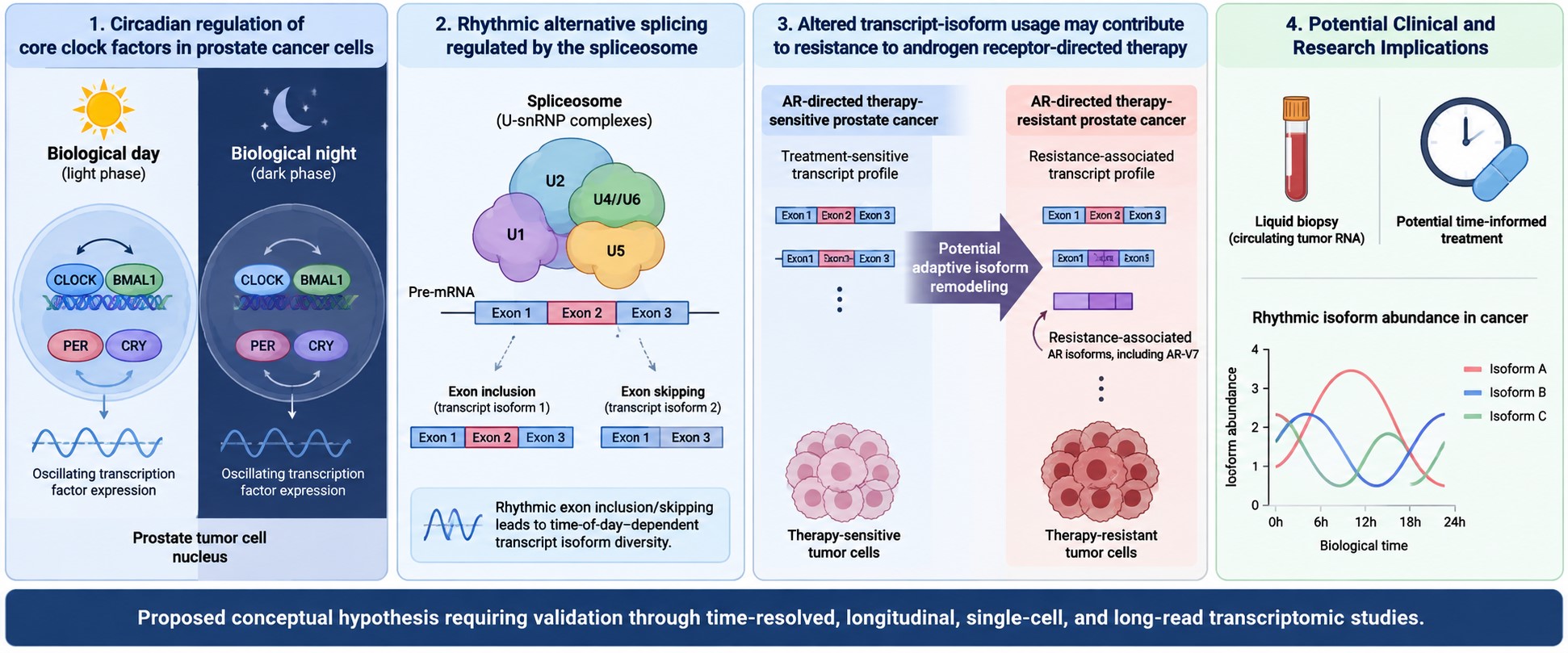
Drug resistance in anticancer therapy has long been a major challenge in oncology, biomedical, and pharmacological research. Despite numerous efforts targeting molecular and pathway-level mechanisms and evaluating combination therapies, current pharmacological approaches remain largely stagnant and show limited consideration of circadian variations in tumor biology and drug resistance. Growing preclinical and clinical evidence suggests that circadian rhythms fundamentally regulate drug..
Published: 26 Mar 2026
Volume 2
Natalya Risinskaya
risinska@gmail.com
Sofia Starchenko
starsof1309@mail.ru
Yulia Chabaeva
uchabaeva@gmail.com
Abdulpatakh Abdulpatakhov
patakh1997@mail.ru
Ekaterina Kotova
kotova.e@blood.ru
Valeriya Surimova
surimova.lera@mail.ru
Dmitry Bessmertnyy
dmitry_bessmertnyy@mail.ru
Anastasia Kashlakova
kashlakova.a@blood.ru
Anastasia Vasileva
vasilnastia@yandex.ru
Zalina Fidarova
fidarova.z@blood.ru
Olga Aleshina
gavrilina.o@blood.ru
Anna Yushkova
ann.unikova@bk.ru
Olga Dubova
doe30102001@gmail.com
Kseniya Nikiforova
nikiforova.k@blood.ru
Nikolay Kapranov
kapranov.n@blood.ru
Irina Galtseva
galtseva.i@blood.ru
Alina Ponomareva
a.ponomareva@genomed.ru
Ilya Kanivets
dr.kanivets@genomed.ru
Sergey Korostelev
korostelevsa@genomed.ru
Sergey Kulikov
smkulikov@mail.ru
Elena Parovichnikova
parovichnikova.e@blood.ru
Published: 31 Mar 2026
Volume 2
Vladimir N. Pak
oncoshut@gmail.com
Alpha-fetoprotein (AFP) delivers nutrients to immature cells in a shuttle-like manner via alpha-fetoprotein receptor (AFPR)-mediated endocytosis. A small subset of immature myeloid-derived suppressor cells (MDSCs) acts as a key regulator of immune tolerance during pregnancy, cancer, and other conditions. MDSCs, low doses of AFP, and AFP-binding ligands can modulate both the innate and adaptive immune responses. MDSCs decrease excessive immune..
We use cookies to improve your experience on our site. By continuing to use our site, you accept our use of cookies. Learn more