

 ACCESS
Review Article
ACCESS
Review Article
Volume 1, Article ID: 2026.0005

Oluwaseyi Matthew Abioye
abioye.oluwaseyi@lmu.edu.ng

Kamorudeen Yusuf
yusuf.ok@unilorin.edu.ng

Matthew Amodu
amodu.matthew@lmu.edu.ng

1 Department of Agricultural and Biosystems Engineering, Landmark University, PMB 1001, Omu Aran, Nigeria
2 Department of Agricultural and Biosystems Engineering, University of Ilorin, PMB 1515, Kwara State, Nigeria
* Author to whom correspondence should be addressed
Received: 08 Mar 2026 Accepted: 29 Jul 2026 Available Online: 30 Jul 2026
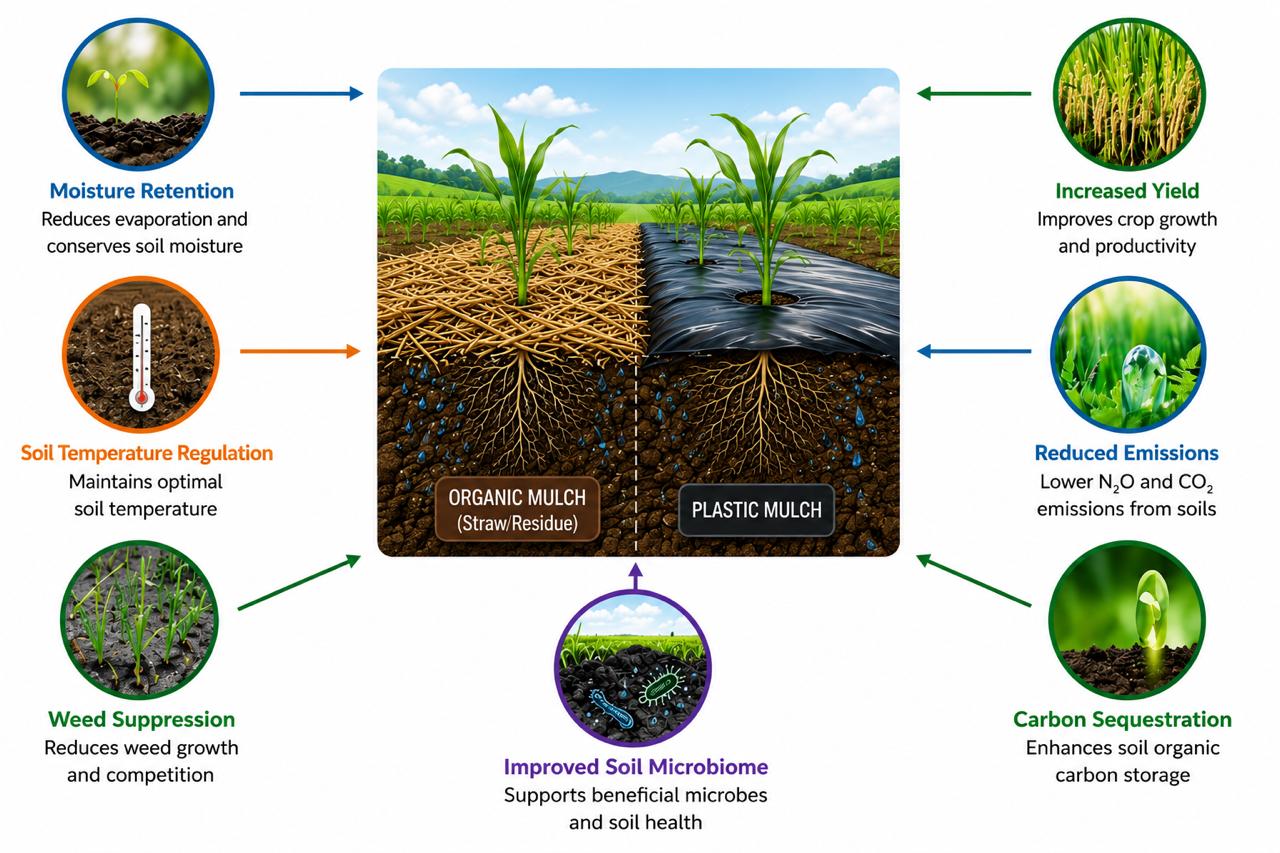
Mulching is a major agronomic practice that improves agricultural productivity and mitigates the effects of climate change. It is also an effective soil and water conservation method, as it minimizes evaporation, regulates soil temperature, and enhances water retention, particularly in dry and semi-arid areas that constitute approximately 40% of the world's land mass. There are differences in the contribution of organic and inorganic mulching materials, where organic mulches are more beneficial in enhancing the soil fertility by cycling of nutrients, enhancement of microorganisms, but inorganic mulches, such as plastic films, are more beneficial in terms of immediate moisture retention but have adverse environmental effects, such as plastic pollution. Biodegradable mulches and hydrogel-based materials are examples of new products and solutions that offer eco-friendly substitutes that lower the level of ecological hazard. Mulching has been reported to enhance crop production and water-use efficiency through precision irrigation methods such as drip irrigation. In addition, mulching lowers the emissions of greenhouse gases through regulation of microbial activity of the soil and increasing organic carbon sequestration in soil, especially when used in tandem with other amendments such as biochar. Although mulching has been shown to improve resistance to climate variability among peasant farmers, particularly in middle Africa and Asia, socioeconomic and technological challenges remain. Climate-smart agriculture can be implemented by incorporating mulching within climate-sensitive agricultural systems with the assistance of digital technologies and policy-makers to promote sustainable intensification and food security across the world. The importance of mulching towards climate resiliency, sustainable production and environmental stewardship has been seen in this review in a multifaceted way.
Disclaimer: This is not the final version of the article. Changes may occur when the manuscript is published in its final format.