

 ACCESS
Research Article
ACCESS
Research Article
Volume 1, Article ID: 2026.0008

Cyprian Obinna Azinta
azinta.acom@gmail.com

Ogochukwu Cornelius Nevo
ogochukwu.nevo@esut.edu.ng

Onuora Okorie
onuora.okorie@esut.edu.ng

Department of Chemical Engineering, Enugu State University of Science and Technology, Enugu, Nigeria
* Author to whom correspondence should be addressed
Received: 01 May 2026 Accepted: 13 Aug 2026 Available Online: 14 Aug 2026
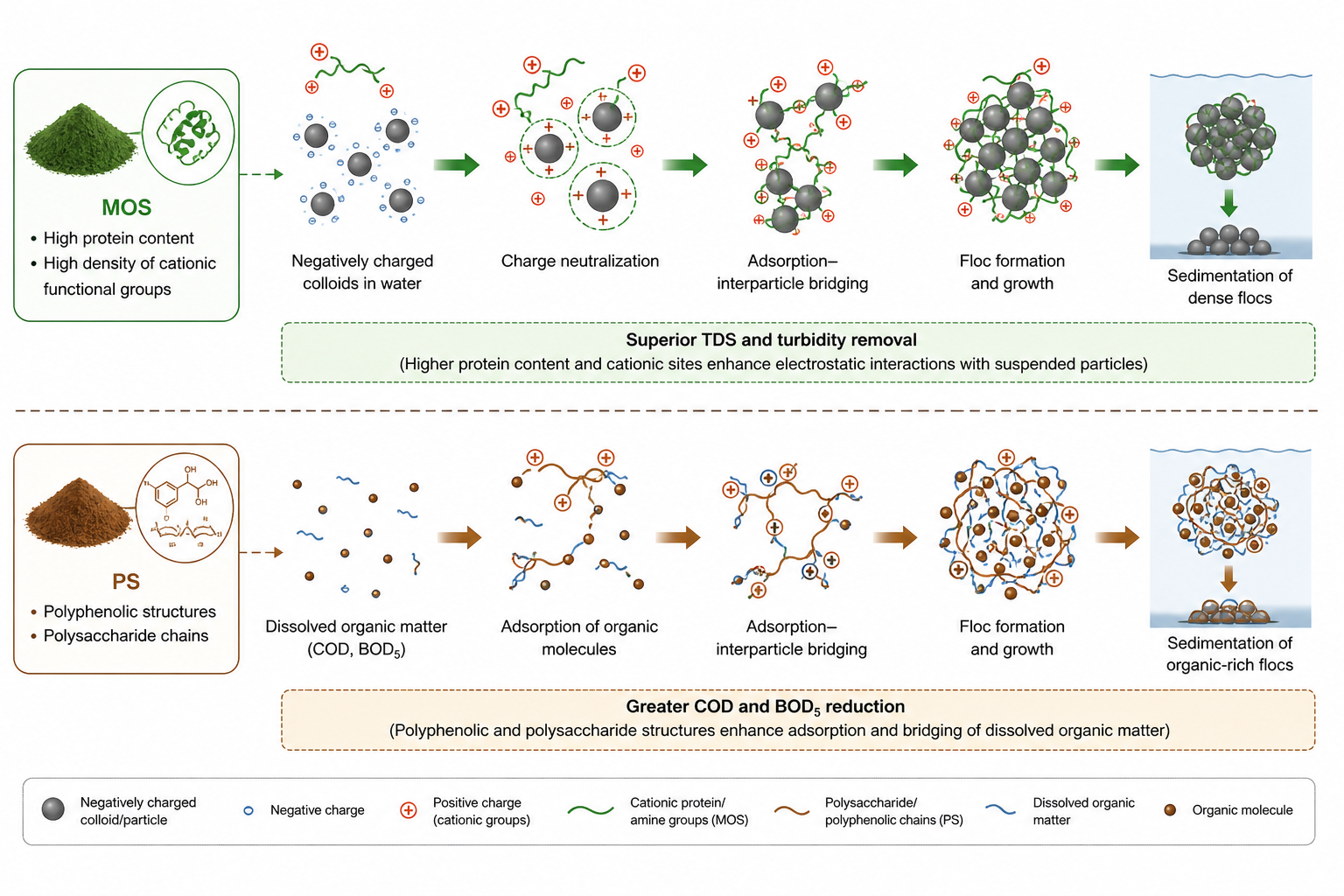
High levels of chemical oxygen demand (COD), biochemical oxygen demand (BOD5), turbidity, and total dissolved solids (TDS) in brewery wastewater (BWW) pose serious environmental and public health concerns. Using avocado pear seed (PS) and Moringa oleifera seed (MOS) as sustainable bio-coagulants, we treated BWW sample through coagulation–flocculation experiments. The bio-coagulants were prepared by aqueous extraction and characterized through Fourier transform infrared (FTIR) spectroscopy and proximate analysis. TDS was selected as the sole response variable for process optimization. One-factor-at-a-time experiments established the operating ranges after which response surface methodology (RSM) based on central composite design was employed to optimize the effects of pH, coagulant dosage, and treatment time on TDS removal. The developed quadratic models adequately described the experimental responses and were successfully validated. FTIR analysis confirmed the presence of amine, hydroxyl, carbonyl, and aromatic functional groups associated with coagulation activity. Combined with evidence from the literature, these results suggest that pollutant removal proceeds mainly through charge neutralization, adsorption, and interparticle bridging. Under the optimized conditions of pH 4, dosage 4 g and treatment time 40 min, experimental TDS removals of 91.33% and 94.23% were obtained for PS and MOS, respectively. Under the same experimental treatment conditions, PS and MOS also achieved turbidity removals of 85.1% and 93.3%, COD removals of 88.9% and 77.5%, and BOD5 removals of 89.2% and 68.8%, respectively. Comparison with previously reported plant-derived bio-coagulants further revealed that both PS and MOS exhibit competitive treatment performance despite the use of simple distilled-water extraction. These findings establish avocado pear seed and Moringa oleifera seed as effective, low-cost, and environmentally sustainable alternatives to conventional chemical coagulants for brewery wastewater treatment and provide a basis for future evaluation of their combined application.
Disclaimer: This is not the final version of the article. Changes may occur when the manuscript is published in its final format.