


 ACCESS
Research Article
ACCESS
Research Article
Volume 1, Article ID: 2025.0005

Sachin Rathour
sachinrt638@bhu.ac.in


Prakash Singh Badal
psbadal@bhu.ac.in


Virendra Kamalvanshi
vkvanshi@bhu.ac.in


Saket Kushwaha
saket.kushwaha@bhu.ac.in


S. R. Devegowda
devegowda.sr@rgu.ac.in


Evans Kemboi
evanskemboi@bhu.ac.in


Bharath Kumar Mannepalli
bharath.m@bhu.ac.in


Prakhar Deep
prakhardeep@bhu.ac.in

1 Department of Agricultural Economics, Institute of Agricultural Sciences, Banaras Hindu University, Varanasi 221005, Uttar Pradesh, India
2 Department of Agricultural Economics, Rajiv Gandhi University, Doimukh 791112, Arunachal Pradesh, India
* Author to whom correspondence should be addressed
Received: 12 May 2025 Accepted: 30 Sep 2025 Available Online: 01 Oct 2025 Published: 31 Oct 2025
Despite growing global interest, neuromarketing remains underutilized within India’s agri-food sector. This study examines the awareness, application, and potential of neuromarketing tools, including EEG (electroencephalography), eye-tracking, the Implicit Association Test (IAT), and virtual or augmented reality (VR/AR), in influencing sustainable consumer behavior in India. Respondents were selected using purposive and snowball sampling techniques, ensuring a diverse representation of stakeholders. While global corporations leverage neuroscience to refine marketing strategies, Indian agribusinesses and food startups often lack the awareness, infrastructure, and policy support to adopt such innovations. Using mixed methods, the study surveyed 120 participants for the quantitative portion and conducted in-depth qualitative interviews with 12 experts from marketing, academia, FMCGs, and agri-businesses. The results reveal that only 27% are familiar with neuromarketing, and just 14% report actively implementing it. Awareness and application are higher in metro-based food-tech startups and FMCGs, while traditional agri-businesses and policymakers show minimal engagement. Education and urban access strongly influence exposure to neuromarketing. The findings underscore a significant urban–rural and disciplinary divide. The final prioritization highlights that accuracy and lack of bias emerged as the most critical factors influencing the adoption of neuromarketing tools for sustainable product marketing in India’s agri-food sector. Among the application areas, advertising (weight = 0.610) and branding (weight = 0.271) emerged as the most influential domains, indicating where business decision-makers are most likely to leverage neuromarketing techniques to boost consumer engagement and advance sustainability-oriented strategies. Neuromarketing holds significant potential for promoting sustainable choices, such as climate-resilient crops and eco-labeled products, by engaging with consumers’ subconscious responses. The study recommends policy interventions, including academic integration, funding support, ethical frameworks, and public-private partnerships. By aligning neuromarketing with SDGs—particularly SDG 2, 4, and 12—this research positions it as a transformative tool for advancing sustainability and consumer-centric innovation in India’s food and agribusiness sector.
Neuromarketing, a concept introduced by Dutch organizational theorist Ale Smidts in 2002, offers a revolutionary approach to understanding consumer behavior by examining the neural and physiological processes underlying decision-making. Neuromarketing has emerged as a rapidly evolving interdisciplinary field, drawing upon insights from neuroscience, psychology, and marketing. Advanced methods such as EEG, Eye Tracking, Functional Magnetic Resonance Imaging (FMRI), and Galvanic Skin Response (GSR) are employed to identify subconscious responses and emotional stimuli that conventional approaches like surveys or focus groups may fail to capture [1,2]. Neuromarketing, a branch of neuroeconomics, offers practical insights into consumer decision-making processes. Over the past two decades, neuroeconomics gained practical applications in consumer neuroscience and neuromarketing [3,4]. Businesses are increasingly employing neuroscience-based tools to enhance branding, product innovation, advertising design, and customer engagement, particularly in the food and beverage sector, where emotions play a crucial role in purchasing decisions [5,6]. Neuromarketing is gaining prominence in agriculture and agribusiness, as it aids in understanding how cognitive and emotional factors shape food preferences, sustainability perceptions, and consumption behaviors. This approach can design campaigns that not only increase sales but also encourage sustainable behaviors, such as promoting healthier options like millets over rice or locally produced foods, by appealing to both rational and subconscious drivers of choice [7]. Neuroscience advancements enable marketers to accurately measure consumer attention, emotional arousal, and memory retention [8]. These tools are used globally to evaluate responses to eco-friendly packaging, sustainability labels, farm-to-table branding, and health-focused messages. Neuro-based studies indicate that visuals emphasizing nature, community well-being, and health benefits enhance emotional engagement and improve memory recall. It augments traditional marketing by incorporating behavioral economics, cultural psychology, and consumer neuroscience, resulting in holistic, sustainability-oriented marketing frameworks. This interdisciplinary collaboration enhances product success while advancing broader social objectives, including climate resilience, food sovereignty, and public health. Neuromarketing, though an emerging global marketing approach, remains underdeveloped in India’s agri-food sector. Indian agribusinesses, food startups, and FMCG brands continue to face challenges such as limited awareness, inadequate technical capacity, and the absence of validated implementation models. The absence of empirical research, region-specific consumer insights, and regulatory frameworks further restricts its effective use. These gaps limit innovation in food marketing and hinder the sector’s alignment with nutritional security, sustainability, and ethical consumption goals. Neuromarketing is gaining traction in India’s agri-food business due to its ability to comprehend customer behavior regarding nutrition, environmental responsibility, and ethical sourcing. It can encourage better diets, ecologically responsible choices, and local food systems through bridging the gap between consumer psychology and sustainable marketing, resulting in more sustainable production and consumption. Therefore, this study seeks to assess the awareness and application of neuromarketing within India’s agribusinesses, food startups, and FMCG companies, identify challenges and opportunities in employing neuroscience-based marketing strategies, and suggest recommendations for incorporating neuromarketing into sustainable food policies and consumer engagement. By linking marketing strategies to subconscious cues that promote sustainable food choices—such as local foods, organic produce, or climate-smart grains like millets—this research aims to offer innovative solutions to encourage eco-friendly consumer behavior. It aligns with global sustainability goals, such as SDG 2 (Zero Hunger), SDG 4 (Quality Education), and SDG 12 (Responsible Consumption and Production), as well as with India’s national priorities for food and nutritional security. Ultimately, this research will contribute to the academic discourse on neuromarketing while providing practical, sustainability-oriented insights for Indian marketers, agribusinesses, and policymakers.
This study employed a mixed-methods research design, integrating both quantitative and qualitative approaches to examine the awareness, landscape, and application of neuromarketing within the Indian agri-food sector, with particular focus on its potential connection to sustainable marketing strategies. The descriptive study methodology assessed the understanding and status of neuromarketing techniques across agricultural stakeholders, while the exploratory component investigated their potential to promote sustainable consumer behavior and market growth. Based on this methodology, the study aimed to achieve several key objectives. The first objective was to analyze the level of awareness and acceptance of neuromarketing among Indian agribusinesses and marketers. Second, the study examined the perceived benefits and constraints associated with the use of neuromarketing in this context. Third, it explored the potential of neuromarketing approaches to align with sustainable food marketing and consumption objectives. Finally, the study aimed to propose practical strategies for integrating neuromarketing into India’s agri-food marketing practices. This integration would foster corporate growth while advancing sustainability objectives. The snowball sampling approach was used in this study to choose 120 participants for a quantitative survey and 12 experts for in-depth qualitative interviews, which included marketing professionals, FMCG companies, food—tech startups, researchers, academics in consumer behavior, neuroscience, and food marketing, as well as industry specialists and policymakers working in sustainable food systems. Primary data was collected using a semi-structured questionnaire and in-depth interviews. The questionnaire captured respondents’ familiarity with neuromarketing techniques, including EEG, eye-tracking, facial expression analysis, and GSR, as well as their perspectives on how these tools influence marketing performance and consumer insights. In-depth interviews provided qualitative insights into industry-specific applications, implementation challenges, and the extent to which firms were integrating neuromarketing with sustainable branding and product development. Secondary data were collected from peer-reviewed journal articles, global market research reports by organizations such as Nielsen and Millward Brown, white papers by neuromarketing associations, company websites, policy documents, and published case studies on international best practices. Data analysis involved both statistical and thematic techniques. Quantitative data were analyzed using SPSS, applying descriptive statistics such as percentages, frequencies, means, and cross-tabulation by education, industry segment, and regions. Awareness Level was measured using Likert-scale items such as: “I am familiar with neuromarketing as a concept”; “I have heard of tools like eye-tracking, EEG, or facial coding”; Responses were categorized as: Not Aware, Partially Aware, and Fully Aware. Application Level: Binary and scale-based questions, such as: “Has your organization used any neuromarketing tool in practice?” Frequency and type of use were also recorded. Fuzzy AHP Equations and Formulas for Neuromarketing Adoption: Fuzzy AHP is a widely used multi-criteria decision-making (MCDM) method that effectively addresses uncertainty and subjectivity in decision-making. It is also recognized for its flexibility and applicability in real-world contexts, particularly in situations where pairwise comparisons may exhibit inconsistency [9,10,11]. The method of decomposing complex problems into hierarchical structures and incorporating fuzzy logic into expert judgments enables more precise prioritization of qualitative criteria (Chou, 2019), making it highly relevant in sustainability research (Calabrese, 2019), with applications in green supply chain management [12] and environmental assessment frameworks [13]. The study uses Fuzzy AHP to assess the factors influencing managers’ willingness to adopt neuromarketing for sustainable product marketing in India’s agri-food sector. The methodology employs a series of equations and formulas to evaluate adoption criteria and alternatives, thereby establishing a foundation for analyzing the adoption of neuromarketing. The following steps were undertaken: Triangular Fuzzy Numbers (TFN): Triangular fuzzy numbers (TFN) were used following expert opinions, with
, where Construction of the Fuzzy Pairwise Comparison: criteria were collected from experts, and the fuzzy comparison matrix was constructed as:
The reciprocal property of fuzzy judgments was maintained as:
Fuzzy Synthetic Extent Value Calculation: For each criterion iii, the fuzzy synthetic extent value was calculated using:
Degree of Possibility: The degree of possibility was applied to compare fuzzy numbers. For two fuzzy numbers , the degree of possibility was computed as:
Derivation and Normalization of Fuzzy Weights: The fuzzy weights of criteria were defuzzified using the centroid method:
The weights were then normalized as:
Consistency Check: To ensure logical consistency in the pairwise comparison matrix, the fuzzy consistency ratio (CR) was calculated as:
Wherever relevant, inferential statistical techniques were employed to explore the relationships between variables. The qualitative data collected through interviews were transcribed, systematically coded, and examined using thematic analysis to capture recurring patterns, experiences, and strategic insights. To further assess the practical feasibility of neuromarketing adoption in the Indian agri-food sector, a SWOT analysis (Strengths, Weaknesses, Opportunities, and Threats) was also conducted.
The study was conducted in accordance with established ethical standards. Participants were thoroughly informed about the objectives of the research and provided their informed consent, either in written or verbal form, before participation.
Anonymity and confidentiality were rigorously upheld, and no personal or sensitive information was disclosed. Ethical clearance was obtained from the relevant institutional review board before commencing fieldwork.
While the study generated valuable insights, it also encountered certain limitations. As neuromarketing is still an emerging field in India, the number of firms actively using such tools was limited. This constrained the scope of data collection and the availability of firm-specific case studies. Moreover, access to proprietary neuromarketing data was restricted due to corporate confidentiality policies. Finally, the use of purposive sampling and the exploratory nature of the study limited the generalizability of findings but provided a strong foundation for future research and targeted application.
Additionally, to a limited extent, AI-based tools such as ChatGPT were used exclusively to enhance grammatical clarity and ensure that the manuscript was free from linguistic errors.
The study results reveal a complex yet promising landscape for the application of neuromarketing within India’s agri-food sector. The Invasive and Non-Invasive Neuromarketing techniques were identified & classified (Table 1), and their implications in the agri-food sector were also discussed (Table 2). Quantitative data collected from 120 respondents across marketing firms, agribusinesses, FMCG companies, and research institutions indicated that awareness of neuromarketing remained relatively low overall (Table 3 & Figure 1). Only 27% of respondents reported being familiar with neuromarketing as a formal field of study or professional practice. However, a larger portion—about 46%—had heard of individual tools such as eye-tracking or facial coding, suggesting fragmented but growing exposure to neuromarketing technologies. Classification of invasive and non-invasive neuromarketing techniques. Neuromarketing techniques and their implications in the agri-food sector. Summary of neuromarketing awareness, application, and barriers in India’s agri-food sector. Thematic analysis of 12 expert interviews further revealed that the major barriers to adoption included high costs of neuromarketing equipment, lack of trained professionals, limited awareness about its business value, and ethical ambiguities. Respondents noted that small and medium-sized enterprises (SMEs), which form the backbone of India’s agri-food economy, often lack the technological infrastructure and specialized expertise necessary for the effective implementation of neuromarketing techniques. Experts suggest that cultural factors, including consumer discomfort with biometric monitoring, could potentially hinder its wider acceptance. The results of the study indicate a strong interest in neuromarketing, particularly for enhancing customer experience and promoting sustainable consumption. Over 65% of respondents expressed interest in understanding customer preferences related to health, sustainability, and food safety, particularly in the context of marketing initiatives promoting organic products, millets, and plant-based foods. This demonstrates the power of neuromarketing in promoting environmentally conscientious products. Among those familiar with neuromarketing, only 14% of respondents reported that their organizations had actively implemented such tools in any part of their marketing or product development processes. The use of neuromarketing was found to be more common among food-tech startups and larger FMCG companies operating in metropolitan regions, particularly Delhi-NCR, Mumbai, and Bengaluru. These firms were primarily using eye-tracking, EEG headsets, and facial emotion analysis during product testing, packaging design, and digital advertisement evaluation. The research findings show the levels of awareness and application of neuromarketing among various stakeholder groups in India (Table 4 & Figure 2). The data indicate that academic researchers demonstrated the highest level of awareness (55%), whereas the actual application of neuromarketing remained low across all groups, particularly among policymakers and agribusiness stakeholders. The levels of awareness and application of neuromarketing among various stakeholder groups in India. The findings indicated a varied level of awareness and application of neuromarketing techniques across different stakeholder groups in India’s agri-food sector. Academic researchers showed the highest theoretical understanding, with over 55% acknowledging familiarity with neuromarketing principles. However, only 18% had ever employed these tools in their research. Marketing professionals reported moderate awareness (42%) and the second-highest application rate (22%), typically in digital ad testing and packaging design. Startups in the food sector demonstrated a relatively higher inclination to experiment with neuromarketing tools, reflecting their adaptive and innovation-driven culture. Approximately 47% of respondents were familiar with the concept, and nearly 27% had attempted to apply basic tools such as eye-tracking or biometric response measurement for product testing. In contrast, traditional agribusiness firms reported low levels of awareness (33%) and even lower levels of application (12%), primarily constrained by limited technical expertise and inadequate funding. Policy makers, a crucial stakeholder for institutionalizing any innovation, reflected a concerning lack of engagement, with only 15% showing awareness and a mere 5% acknowledging any exposure to neuromarketing frameworks. The consumer sample, although not directly involved in application, showed limited familiarity with the term (28%), though they had unwittingly served as respondents in neuromarketing studies conducted by private entities. The study revealed important nuances in the awareness and application of neuromarketing in India’s agri-food sector, highlighting both gaps and opportunities. Regionally, stakeholders from metropolitan and Tier-1 cities such as Bengaluru, Mumbai, Delhi, and Hyderabad exhibited significantly higher awareness and engagement with neuromarketing tools. In contrast, stakeholders from Tier-2 and rural regions reported very limited exposure. This urban–rural digital and knowledge divide suggests that access to neuromarketing is currently an elite, urban phenomenon (Figure 3 and Table 5). A comparative table showing key metrics across regions. In terms of education, individuals with backgrounds in business administration, consumer psychology, and neuroscience showed greater familiarity and openness toward neuromarketing applications. Those with only agricultural or technical education were less likely to be aware of or apply such tools. This highlights the need to integrate neuromarketing concepts into interdisciplinary education programs in agricultural universities and management schools to bridge the existing awareness gap (Table 6). Neuromarketing awareness and application by education & industry segment. Industry segment-wise, startups and tech-driven FMCG firms showed the highest application rates. These organizations are typically more agile, innovation-oriented, and willing to experiment with biometric testing and consumer sentiment analysis. In contrast, large agri-business firms and cooperatives showed lower application levels, possibly due to bureaucratic inertia, traditional marketing reliance, and budget constraints. SDG 4 (Quality Education) is applicable here through academic integration and industry collaboration (Table 6). The results, as presented in Table 7 and Figure 4, show a positive relationship between sustainability-oriented branding and the willingness to adopt neuromarketing tools. Firms that had previously undertaken environmental or social responsibility campaigns were more likely to recognize the value of understanding consumers’ subconscious attitudes toward eco-labeled products or sustainable packaging. Interview data supported this trend, with several respondents stating that neuromarketing could help decode hidden consumer biases that traditional methods often overlook—such as the emotional impact of “green” packaging, or the appeal of local and seasonal food items. Perception link between sustainability and neuromarketing. The Fuzzy Analytic Hierarchy Process (Fuzzy AHP) was utilized to determine the relative weights of adoption criteria and application alternatives through expert-based pairwise comparisons, using symmetric triangular fuzzy numbers. Aggregated fuzzy judgment matrices were developed from expert inputs, and the consistency of these comparisons was assessed using the approach outlined by Gogus [14], confirming data reliability with acceptable inconsistency ratios. The final prioritization, presented in Table 8 and Figure 5, indicates that accuracy and bias emerged as the most critical criteria influencing the adoption of neuromarketing tools for sustainable product marketing in India’s agri-food sector. Among the application areas, advertising (weight = 0.610) and branding (weight = 0.271) were identified as the most impactful, highlighting the domains where business decision-makers are most likely to apply neuromarketing techniques to strengthen consumer engagement and advance sustainability-oriented strategies [15,16]. Fuzzy AHP results for neuromarketing adoption in India’s agri-food sector. Furthermore, the SWOT analysis (Table 9) indicated that although the current penetration of neuromarketing is low, there are substantial opportunities for growth. Strengths included India’s expanding tech ecosystem, increasing consumer awareness of health and sustainability, and the availability of global neuromarketing firms. The weaknesses were primarily associated with high costs and limited awareness, whereas the opportunities lay in training programs, collaborations with academic institutions, and integration with digital marketing strategies. Threats included ethical concerns, data privacy issues, and potential misuse of emotional manipulation in advertising. SWOT analysis– neuromarketing in India’s agri-food sector. In summary, the findings demonstrated that while neuromarketing is still an underutilized tool in the Indian agri-food sector, it holds significant potential—especially when aligned with sustainable marketing objectives. The study confirmed that strategic adoption of neuromarketing could help bridge the gap between consumer intentions and behaviors, leading to more effective, ethical, and sustainability-driven marketing practices.Table 1: Type
Technique
Measures/Description
Usage in Marketing
Invasive
Intracranial EEG (iEEG), DBS
Direct neural activity through implants
Clinical or neuroscience research only
Non-Invasive
EEG
Brain wave patterns, engagement, and attention
Widely used in ad testing and product design
Non-Invasive
fMRI
Blood flow in the brain, emotional, and cognitive processing
Deep insights; expensive, mostly academic/advanced
Non-Invasive
Eye Tracking
Gaze fixation, visual attention, scan path
Website layout, packaging, in-store navigation
Non-Invasive
Facial Coding
Emotional expression via micro-expressions
Real-time emotional reactions to ads/products
Non-Invasive
Galvanic Skin Response
Emotional arousal, stress/excitement
Emotional impact of stimuli (ads, pricing, messages)
Non-Invasive
Heart Rate Monitoring
Physiological arousal and emotional intensity
Identifying emotional peaks in consumer response
Non-Invasive
Biometric Sensors
Breathing, posture, pupil dilation
Overall emotional and physical response assessment
Non-Invasive
Implicit Association Test (IAT)
Subconscious preferences and biases
Brand perception, hidden attitudes, loyalty insights
Non-Invasive
VR/AR (Virtual/Augmented Reality)
Simulated real-world environments and consumer interactions
In-store simulations, product experience, immersive testing
Table 2: Neuromarketing Technique
Key Findings
Strategic Implications
Eye-Tracking Technology
Consumers fixate on clean, minimalistic packaging with high-contrast elements. Sustainability labels and health claims attract attention, but complex designs reduce engagement.
Positioning of price, claims, and certifications influences purchase intent.Highlight core messages (e.g., “organic”, “local”) in visually prominent areas. Avoid cluttered or text-heavy designs to support faster decision-making.
Use contrast and focal design elements to guide consumer gaze effectively.Facial Expression Analysis (FEA)
Positive emotions like happiness and trust are linked to products with health and sustainability narratives.
Confusion and skepticism arise from ambiguous or unfamiliar labels.
Seasonal and limited editions evoke excitement.Incorporate emotional storytelling to humanize sustainable brands.
Simplify label language and include familiar symbols to build trust.
Launch seasonal or exclusive products to create emotional appeal and urgency.Electroencephalography (EEG)
Health benefit claims (e.g., “low sugar”) increase cognitive engagement.
Too many product choices cause cognitive overload- Familiar and nostalgic cues evoke stronger neural responses.Communicate health benefits clearly and succinctly.
Limit excessive product variations to simplify consumer choices.
Use heritage branding and nostalgic themes to boost brand preference.Galvanic Skin Response (GSR)
Novel foods like plant-based alternatives spark excitement.
Traditional foods generate less arousal but deeper loyalty
Promotions elevate arousal, but quality perception outweighs price for premium items.Introduce innovative products while retaining familiar elements for consumer comfort.
Balance innovation with tradition to target diverse segments.
Align pricing with quality perceptions for premium products.Implicit Association Testing (IAT)
Strong subconscious preference for organic, local, and sustainable foods.
Artificial ingredients trigger negative associations.
Unfamiliar terms like “regenerative agriculture” need explanation.Emphasize authentic sustainability claims, supported by credible certifications.
Highlight natural, fresh, and minimally processed product attributes.
Implement educational campaigns to increase familiarity with advanced sustainability concepts.Virtual Reality (VR) & Augmented Reality (AR)
AR features (e.g., interactive labels) boost engagement and trust.
VR studies show consumers prefer thematic store layouts.
Personalized digital experiences enhance brand recall.Use AR to showcase origin stories, certifications, and usage tips.
Apply VR insights to optimize store design and product categorization.
Offer AI-driven personalized recommendations in digital shopping environments.Table 3: Aspect
Findings
Total Respondents (Survey)
120 professionals from marketing firms, agribusinesses, FMCGs, and research institutions
Awareness of Neuromarketing
27% familiar with neuromarketing as a field; 46% aware of individual tools (e.g., eye-tracking, facial coding)
Implementation Rate
Only 14% reported active implementation within their organizations
Primary Users
Food-tech startups and large FMCG firms in metropolitan areas (Delhi-NCR, Mumbai, Bengaluru)
Common Tools Used
Eye-tracking, EEG headsets, and facial emotion analysis
Application Areas
Product testing, packaging design, digital ad evaluation
Barriers to Adoption
High costs, lack of trained professionals, limited business awareness, ethical concerns, and lack of access among SMEs
Cultural Concerns
Discomfort with biometric monitoring noted by several experts
Interest in Future Use
65% of participants showed interest in applying neuromarketing to enhance understanding of health, sustainability, and food safety preferences
Promising Areas for Adoption
Marketing of organic products, millets, plant-based foods, and sustainability-driven branding strategies
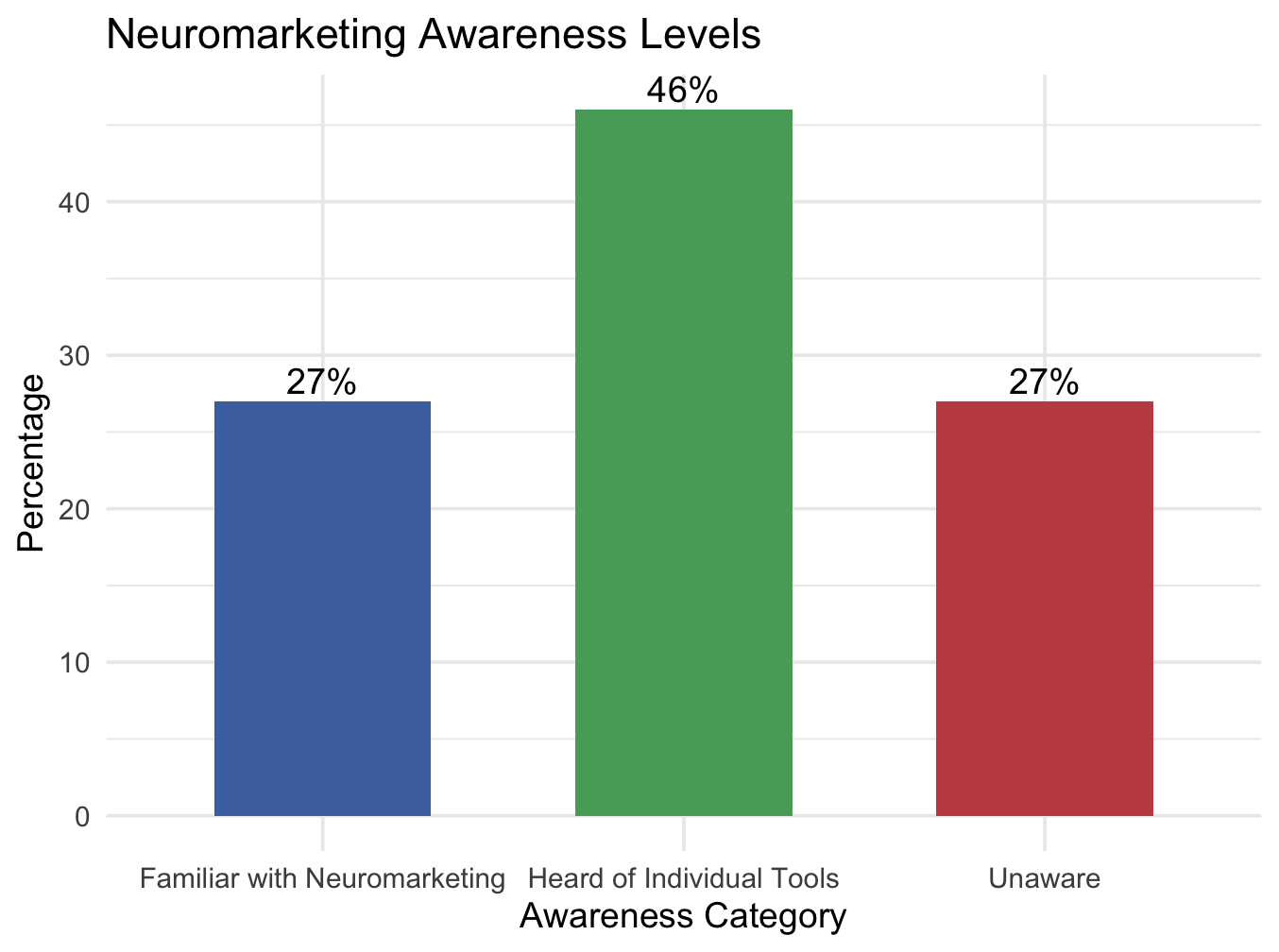 Table 4:
 Stakeholder Group
Awareness (%)
Application (%)
Interpretation
Academic Researchers
55%
18%
Highest awareness, but limited implementation in real-world agri-food studies.
Marketing Professionals
42%
22%
Moderate awareness with slightly higher application due to digital marketing use.
Agri-Business Firms
33%
12%
Awareness and usage are both low due to resource constraints and limited exposure.
Startups in the Food Sector
47%
27%
Relatively higher interest in applying new tech like neuromarketing.
Policy Makers
15%
5%
Very low awareness and negligible application in public sector initiatives.
Consumers (Survey Sample)
28%
Not Applicable
Low awareness; no direct application, but key to understanding consumer response.

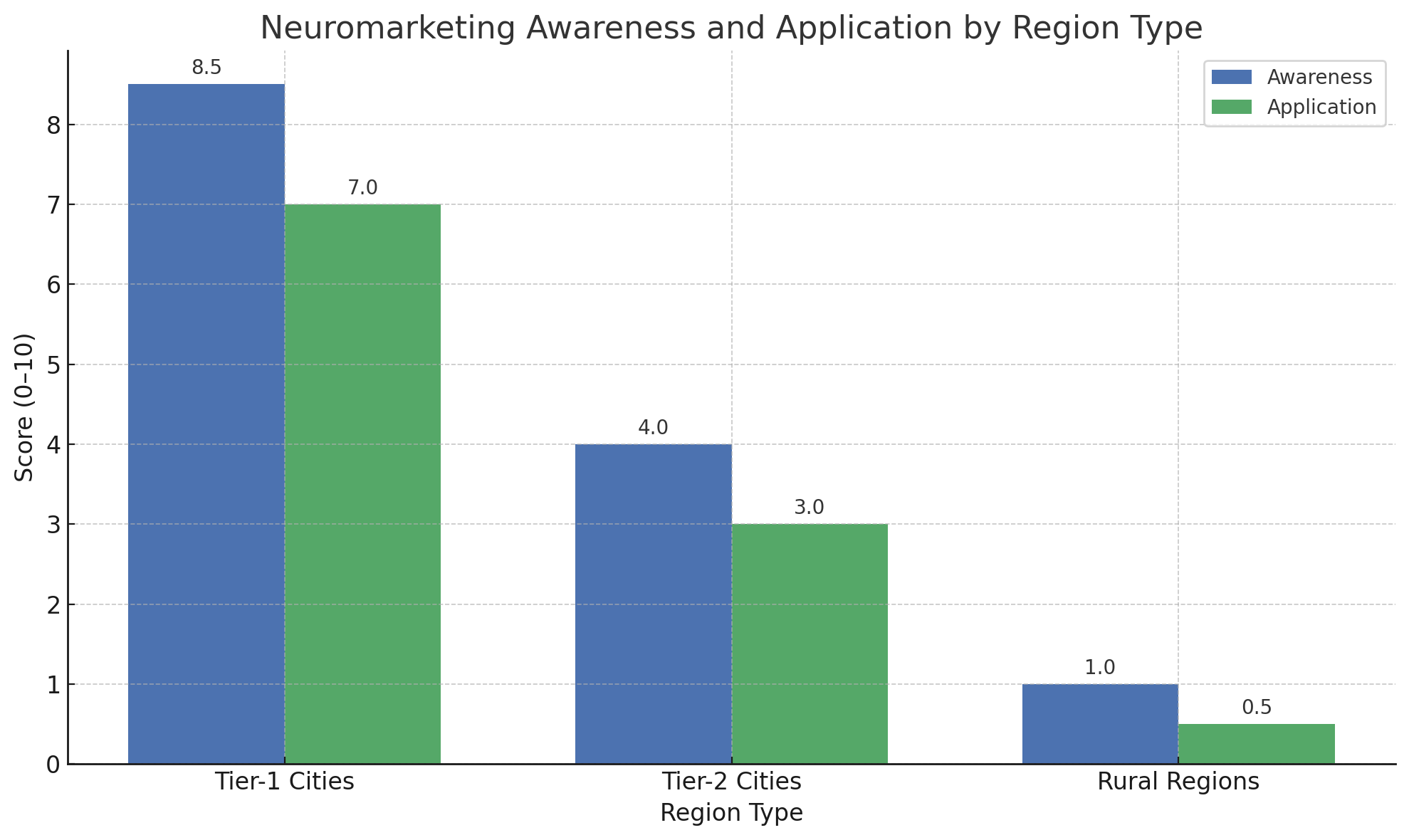 Table 5:
 Region Type
Example Cities
Awareness of Neuromarketing
Application of Tools
Access to Training
Key Barriers
Metropolitan/Tier-1
Bengaluru, Mumbai, Delhi, Hyderabad
High
Moderate to High
Available
Cost, Integration complexity
Tier-2 Cities
Nagpur, Coimbatore, Lucknow
Low
Low
Limited
Awareness, Infrastructure
Rural Areas
Villages in Odisha, Bihar, and MP
Very Low
None or Negligible
Absent
Digital divide, Lack of knowledge
Table 6: Category
Sub-Group
Awareness Level
Application Level
Key Characteristics
Education Background
Business Administration
High
Moderate to High
Marketing focus: open to consumer insight tools
Consumer Psychology/Neuroscience
High
High
Familiarity with biometric and behavioral methods
Agricultural Sciences
Low
Low
Domain-specific focus; limited exposure
Technical/Engineering
Low to Moderate
Low
Analytical orientation; lack of behavioral insight training
Industry Segment
Startups (Food-tech, Agri-tech)
High
High
Agile, innovation-driven, open to experimentation
FMCG (Tech-driven)
High
Moderate to High
Consumer-centric, digital-savvy
Large Agri-business Firms
Moderate
Low
Bureaucratic, traditional approaches, limited innovation budgets
Agricultural Cooperatives
Low
Very Low
Community-driven, budget, and knowledge constraints
Table 7: Branding Focus
% Willing to Adopt Neuromarketing
Common Perceived Benefits
Sustainability-Oriented Firms
68%
Understanding emotional response to green labels, packaging, and local foods
Non-Sustainability-Oriented Firms
32%
Less emphasis on subconscious or emotional consumer behavior
 Table 8:
 Category
Item
Weight
Interpretation/Strategic Implication
Adoption Criteria
Accuracy
0.301
Top priority: firms seek precise consumer insights to target sustainability messages effectively.
Biasness
0.235
Minimizing subjective bias is essential for capturing subconscious attitudes toward green consumption.
Probing Memory & Emotions
0.162
Emotional engagement is key to promoting eco-friendly food products (e.g., millets, organic items).
Information Quality
0.12
Reliable consumer data is critical for designing persuasive, sustainable branding and advertising.
Time-saving
0.085
Efficiency is valued, though less so than insight quality.
Usefulness
0.06
General utility is noted but not a primary driver.
Cost
0.037
Surprisingly low priority; firms are willing to invest if tools provide value for sustainability outcomes.
Application Areas
Advertising
0.61
Main application focus: neuromarketing is seen as crucial for crafting compelling, green-themed campaigns.
Branding
0.271
Used to emotionally align brands with consumer values (e.g., authenticity, local sourcing).
Consumer Decision Making
0.073
Indirect influence via campaigns; less directly managed.
Product Development
0.029
Underutilized; a potential area to explore for sensory and emotional product design.
Pricing
0.017
Minimal role in current strategy; still dominated by traditional analytics.
 Table 9:
 Strengths
Weaknesses
Expanding tech ecosystem
High cost of neuromarketing tools
Growing consumer interest in health & sustainability
Limited awareness and expertise
Presence of global neuromarketing firms
Low penetration in rural/Tier-2 sectors
Strengths
Weaknesses
Expanding tech ecosystem
High cost of neuromarketing tools
Growing consumer interest in health & sustainability
Limited awareness and expertise
Presence of global neuromarketing firms
Low penetration in rural/Tier-2 sectors
Opportunities
Threats
Training & capacity-building programs
Ethical concerns (e.g., subconscious manipulation)
Academic–industry collaborations
Data privacy and consent challenges
Integration with digital marketing and consumer analytics platforms
Regulatory uncertainty on biometric data use
From a sustainability perspective, the use of neuromarketing in the agri-food sector has transformative potential. Sustainable food consumption often requires nudging consumers toward healthier, locally sourced, and environmentally friendly food products. The techniques can reveal underlying judgments and emotional motives in food buying habits, allowing marketers to create ads that connect with sustainability aims and resonate more powerfully with customers. EEG and eye-tracking tools can be utilized to enhance eco-friendly packaging, organic certification labels, and communication strategies that promote the purchase of locally produced millets [16,17]. Neuromarketing can help address systemic issues like food waste and supply chain inefficiency by improving the prediction of consumer preferences. This allows producers and retailers to make informed decisions about inventory management and targeted marketing, promoting sustainable food purchases and enhancing consumer well-being and environmental sustainability. The paper identifies several barriers to the mainstream adoption of neuromarketing in India, including limited technical expertise, inadequate research infrastructure, high costs of biometric technologies, and ethical concerns regarding consumer privacy. To address these challenges, researchers, industry stakeholders, and governments must work together to strengthen skills [18] and expand access. The application of this concept remains at an early stage in the Indian agri-food sector; however, it holds significant potential for driving sustainable innovations. Raising awareness, building technical capacity, and integrating neuromarketing practices into sustainable development strategies could position India at the forefront of responsible, neuroscience-informed marketing.
Despite global growth, neuromarketing remains largely limited in the Indian agri-food industry, with urban entrepreneurs comprising the majority of adopters. There has been significant increase in knowledge among academics and marketing professionals, but real application remains limited, notably among agricultural firms and policymakers. This discrepancy is due to limited exposure, inadequate research infrastructure, and a lack of multidisciplinary collaboration. This research demonstrates a growing interest in neuromarketing tools, particularly among emerging food entrepreneurs and researchers, as competition in the agri-food industry and consumer demand for health-oriented, environmentally sustainable products increase. Such tools have the potential to significantly transform communication strategies and innovation within Indian food businesses. Neuromarketing tools can support the promotion of sustainable food products such as millets, organically grown produce, and traditional crops by helping marketers craft emotionally resonant campaigns that align with consumer values and subconscious preferences. For instance, visual stimuli (e.g., eco-labels, earthy colors, traditional motifs) and storytelling (e.g., local farmer narratives, climate resilience) that trigger favorable brain responses can significantly influence buying decisions toward climate-smart and nutritionally rich crops. This is particularly significant in light of India’s observance of 2018 as the National Year of Millets & 2023 as the international year of Millet (IYOM) and its dedication to achieving key United Nations Sustainable Development Goals (SDGs), notably SDG 2 (Zero Hunger), SDG 4 (Quality Education), and SDG 12 (Responsible Consumption and Production). By applying a neuromarketing framework, stakeholders can enhance consumer receptivity toward traditional and indigenous grains, decrease dependence on water-intensive crops such as rice, and foster the adoption of biodiverse, regenerative agricultural practices. The limitation of this study is that, while it offers novel insights into the intersection of neuromarketing and sustainability within India’s agri-food sector, it is not without its constraints. First, the sample size, though diverse, may not fully capture the heterogeneity of all stakeholders across India, particularly in rural and marginalized regions. Second, the awareness and adoption levels reported are context-specific and may evolve rapidly with changing market dynamics, limiting the generalizability of findings over time. Third, the use of the Fuzzy AHP model, while robust for prioritization, simplifies complex behavioral and contextual factors that could be further explored using longitudinal or experimental designs. Lastly, neuromarketing applications in sustainability remain an emerging field, and thus, the available comparative literature is limited, which may constrain the depth of cross-study validation. 5.1. Policy Implications Capacity Building and Education: There is a need for targeted training programs to develop neuromarketing skills among agricultural economists, rural marketers, and agribusiness professionals. This should encompass workshops, certification courses, and academic modules integrated into agricultural universities and management institutes. Public-Private-Academic Collaborations: Establishing neuromarketing research labs and incubation centers through collaborations between government institutions (like ICAR and NIFTEM), private firms, and universities can accelerate innovation and ensure equitable access to neuro-analytical tools. Funding and Incentives: Financial incentives, including R&D grants, technology adoption subsidies, and startup seed funding, could facilitate the early-stage adoption of neuromarketing in food enterprises, particularly those focused on promoting climate-resilient and sustainable food products. Policy Alignment with Sustainable Food Campaigns: Government-led nutrition awareness campaigns, such as “Eat Right India” and “Poshan Abhiyaan,” should consider incorporating neuromarketing insights to develop more effective public messaging strategies. Ethical Guidelines and Consumer Privacy: As neuromarketing engages with subconscious behavior, it is essential to develop robust ethical frameworks to ensure transparency, data protection, and voluntary participation in neuromarketing studies.
AR
Augmented Reality
EEG
Electroencephalography
FEA
Facial Expression Analysis
FMCGs
Fast-Moving Consumer Goods
FMRI
Functional Magnetic Resonance Imaging
GSR
Galvanic Skin Response
IAT
Implicit Association Testing
SDGs
Sustainable Development Goals
TFN
Triangular fuzzy numbers
VR
Virtual Reality
Conceptualization, Data collection, Methodology, Visualization, Data curation, Software, Formal analysis, and Writing of the original draft: S.R., E.K., B.K.M., and P.D.; Manuscript Revision, Resources, Writing—Review & Editing, Visualization, Supervision, Investigation, Validation: P.S.B., V.K., and S.K.; Data curation, Software, and helped in formal analysis: S.R.D. All authors have read and agreed to the published version of the manuscript.
All data supporting the findings of this study are included within the manuscript.
No consent for publication is required, as the manuscript does not involve any individual personal data, images, videos, or other materials that would necessitate consent.
The authors declare no conflicts of interest.
The study did not receive any external funding and was conducted using only institutional resources.
We gratefully acknowledge the guidance and academic support provided by faculty members of the Department of Agricultural Economics, Banaras Hindu University. This work also benefited from interdisciplinary knowledge drawn from neuroscience, marketing, and agribusiness sectors. We appreciate the assistance of research participants, agri-food entrepreneurs, and policy stakeholders who shared their views during the study. The incorporation of advanced neuromarketing tools, including EEG, IAT, and immersive VR/AR simulations, reflects the integration of cognitive science with sustainable development objectives—offering new pathways for consumer-centric policy and market strategies. The authors gratefully acknowledge the use of ChatGPT, developed by OpenAI, in assisting with language refinement and improving clarity in the preparation of this manuscript. All interpretations, conclusions, and any errors remain the sole responsibility of the authors.
The study protocol was approved by the Department of Agricultural Economics, Institute of Agricultural Sciences, Banaras Hindu University, Varanasi 221005, India, on 06 February 2025; no approval number was issued. The authors kindly confirm that all participants provided informed consent before participation.
[1] Sanfey, A.G.; Rilling, J.K.; Aronson, J.A.; Nystrom, L.E.; Cohen, J.D. The Neural Basis of Economic Decision-Making in the Ultimatum Game. Science 2003, 300, 1755–1758. [CrossRef] [PubMed]
[2] Young, C. Brain Waves, Picture Sorts®, and Branding Moments. J. Advert. Res. 2002, 42, 42–53. [CrossRef]
[3] Reimann, M.; Schilke, O.; Weber, B. Neural Correlates of Trust in Brands: An fMRI Study. J. Mark. Res. 2011, 48, 937–950. Available online: https://www.oliverschilke.com/fileadmin/pdf/Reimann_Schilke_Weber_Neuhaus_Zaichkowsky._Functional_Magnetic_Resonance_Imaging_in_Consumer_Research_-_A_Review_and_Application.pdf (accessed on 26 May 2025).
[4] Weber, B. Neuroeconomics. In Consumer Science: Framework Conditions, Fields of Research and Institutions; Kenning, P.; Oehler, A.; Reisch, L.A.; Grugel, C., Eds.; Springer: Wiesbaden, Germany, 2017; pp. 329–340. (In German). [CrossRef]
[5] Maria, R.; Andy-Felix, J.; Mioara, M.B. Neuromarketing in the Agri-Food Sector. Int. Univ. Logist. Transp. 2022, 65, 247–250. Available online: https://repository.iuls.ro/xmlui/handle/20.500.12811/3469 (accessed on 26 May 2025).
[6] McClure, S.M.; Li, J.; Tomlin, D.; Cypert, K.S.; Montague, L.M.; Montague, P.R. Neural Correlates of Behavioral Preference for Culturally Familiar Drinks. Neuron 2004, 44, 379–387. [CrossRef] [PubMed]
[7] Murphy, E.R. Neuroethics of Neuromarketing. J. Consum. Behav. 2008, 7, 293–302. [CrossRef]
[8] Trocchia, P.J. Caving, Role Playing, and Staying Home: Shopper Coping Strategies in a Negotiated Pricing Environment. Psychol. Mark. 2004, 21, 823–854. [CrossRef]
[9] Nilashi, M.; Yadegaridehkordi, E.; Samad, S.; Mardani, A.; Ahani, A.; Aljojo, N.; Razali, N.S.; Tajuddin, T. Decision to Adopt Neuromarketing Techniques for Sustainable Product Marketing: A Fuzzy Decision-Making Approach. Symmetry 2020, 12, 305. [CrossRef]
[10] Chen, J.F.; Hsieh, H.N.; Do, Q.H. Evaluating Teaching Performance Based on Fuzzy AHP and Comprehensive Evaluation Approach. Appl. Soft Comput. 2015, 28, 100–108. [CrossRef]
[11] Yadegaridehkordi, E.; Nizam, M.H.N.B.M.; Noor, N.F.B.M.; Shuib, L.; Badie, N. Predicting the Adoption of Cloud-Based Technology Using Fuzzy Analytic Hierarchy Process and Structural Equation Modelling Approaches. Appl. Soft Comput. 2018, 66, 77–89. [CrossRef]
[12] Govindan, K.; Kaliyan, M.; Kannan, D.; Haq, A.N. Barriers Analysis for Green Supply Chain Management Implementation in Indian Industries Using Analytic Hierarchy Process. Int. J. Prod. Econ. 2014, 147, 555–568. [CrossRef]
[13] Larimian, T.; Zarabadi, Z.S.S.; Sadeghi, A. Developing a Fuzzy AHP Model to Evaluate Environmental Sustainability from the Perspective of Secured by Design Scheme—A Case Study. Sustain. Cities Soc. 2013, 7, 25–36. [CrossRef]
[14] Gogus, O.; Boucher, T.O. Strong Transitivity, Rationality and Weak Monotonicity in Fuzzy Pairwise Comparisons. Fuzzy Sets Syst. 1998, 94, 133–144. [CrossRef]
[15] Rathour, S.; Badal, P.S.; Kamalvanshi, V.; Kushwaha, S.; Devegowda, S.R.; Kemboi, E.; Mannepalli, B.K.; Deep, P. From Brainwaves to Buying Behavior: Applications of Non-Invasive Neuromarketing Approaches to Food Choice. J. Sci. Res. Rep. 2025, 31, 195–210. [CrossRef]
[16] Bairwa, S.L.; Lakra, K.; Kushwaha, S.; Meena, L.K.; Kumar, P. Agripreneurship Development as a Tool to Upliftment of Agriculture. Int. J. Sci. Res. Publ. 2014, 4, 1–4. Available online: https://www.ijsrp.org/research-paper-0314.php?rp=P272427 (accessed on 26 May 2025).
[17] Bairwa, S.L.; Kalia, A.; Meena, L.K.; Lakra, K.; Kushwaha, S. Agribusiness Management Education: A Review on Employment Opportunities. Int. J. Sci. Res. Publ. 2014, 4, 1–4. Available online: https://www.ijsrp.org/research-paper-0214.php?rp=P262332 (accessed on 26 May 2025).
[18] Kushwaha, S.; Polycarp, I.M. Economics of Small Scale yam Production in Qua’an Pau LGA of Plateau. In The Role of Agriculture in Poverty Alleviation, Proceedings of the 34th Annual Conference of the Horticultural Society of Nigeria, held at Abubakar Tafawa Balewa University (ATBU), Bauchi, Nigeria, 15–19 October 2001; Abubakar Tafawa Balewa University Press: Bauchi, Nigeria, 2001; pp. 69–74. Available online: https://www.globalscienceresearchjournals.org/articles/an-analysis-of-the-supply-for-seed-yams-in-nigeria.pdf (accessed on 26 May 2025).
Disclaimer/Publisher’s Note: The views expressed in this article are those of the author(s) and do not necessarily reflect the views of the publisher or editors. The publisher and editors assume no responsibility for any injury or damage resulting from the use of information contained herein.